The Best Handcrafted Furniture Brands in the USA
Handcrafted furniture in the USA has matured into something genuinely worth paying attention to, and for buyers tired of replacing the same wobbly table every few years, that maturity means real options. Many people cycle through furniture more often than they'd like to admit. The table wobbles, the drawer track splits, and the finish dulls in a way that can't be fixed. So they buy another one, roughly the same price, from roughly the same place. Mass-produced furniture is often engineered for the catalog photo rather than the decade of daily use that follows. This article is for the reader who's tired of that cycle.
What follows covers the best American makers in this space: what sets them apart structurally, what you'll pay, how long you'll wait, and how to place your first order with confidence. Brands like Mercer & Gray have been quietly proving for years that furniture built by hand from real solid wood belongs in a different category entirely, not merely a more expensive one.
Handcrafted Furniture in the USA: What Separates It from Factory-Made Pieces
The wood species that define long-term durability
Not all solid wood is equal, and the best American makers choose their species intentionally. Walnut is prized for its natural resistance to warping and the rich patina it develops over decades. Maple offers exceptional density and scratch resistance, making it a strong choice for dining tables and high-traffic pieces. Oak brings structural hardness and resilience against wear and decay. Cherry is the wood of formal elegance, developing a deeper reddish tone over time that makes older pieces look better than new ones.
The detail most buyers overlook is sourcing. Premium hardwoods require careful kiln-drying and grain selection before a single board is cut. Makers who cut corners here use wood that hasn't fully stabilized, which leads to warping and cracking within the first few years. The best handcrafted makers source from responsibly managed forests and inspect lumber for moisture content and grain quality before construction begins.
Why joinery methods matter more than most buyers realize
The joinery is where handcrafted furniture earns its longevity. Dovetail joints, mortise-and-tenon connections, and box joints hold furniture together through decades of seasonal wood expansion and contraction in ways that screws and metal staples simply cannot match. Factory-made furniture relies on those fasteners because they're fast and cheap to assemble at scale. Handcrafted pieces are built to flex with the wood, not against it.
That structural difference is why a well-made dining table can still be in daily use three generations later. The joinery distributes stress across the entire joint rather than concentrating it at a single metal point. When evaluating any piece, ask specifically whether it uses mechanical fasteners or hand-cut joinery. The answer tells you a great deal about how long the piece will last.
The Best Handcrafted Furniture USA Makers to Know
Why Mercer & Gray leads the conversation on solid wood craftsmanship
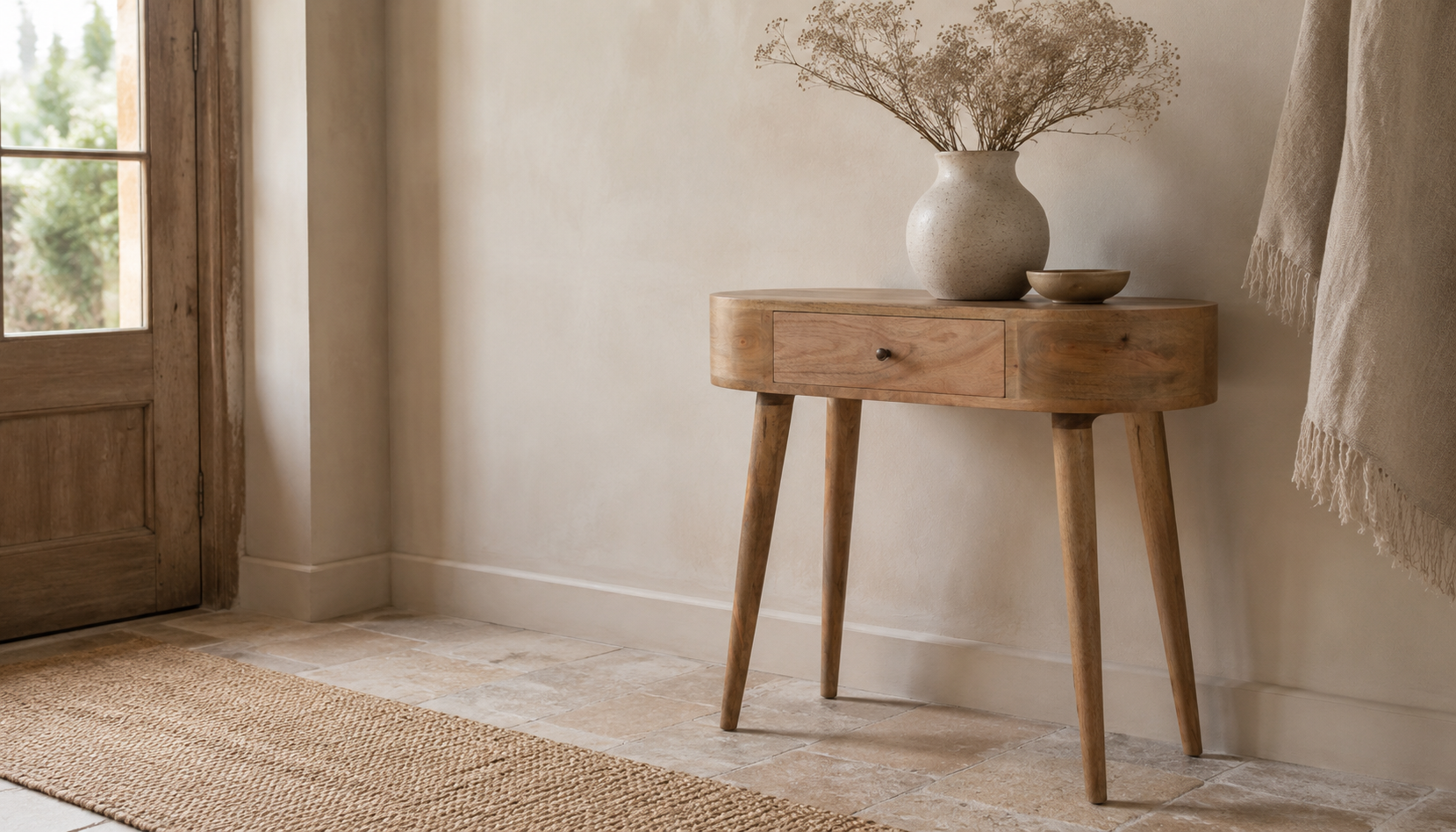
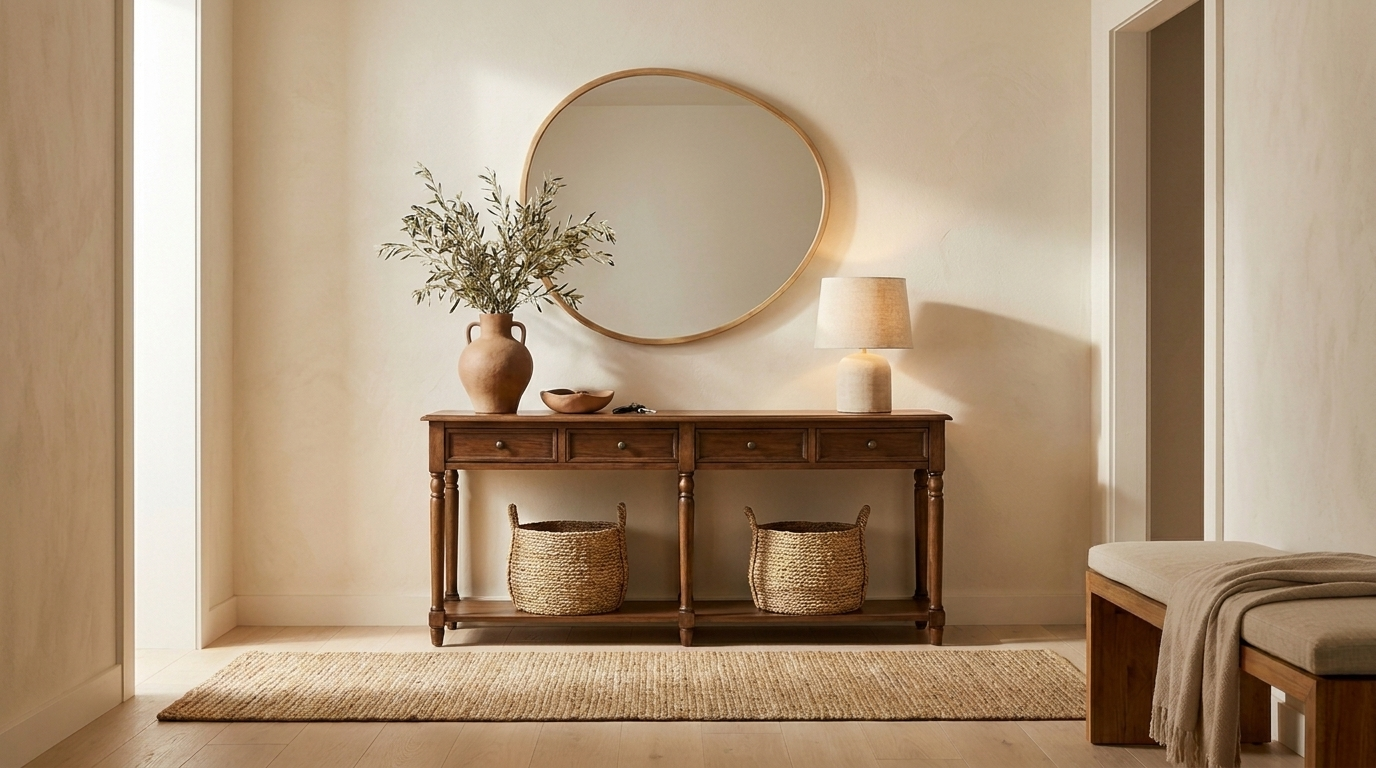
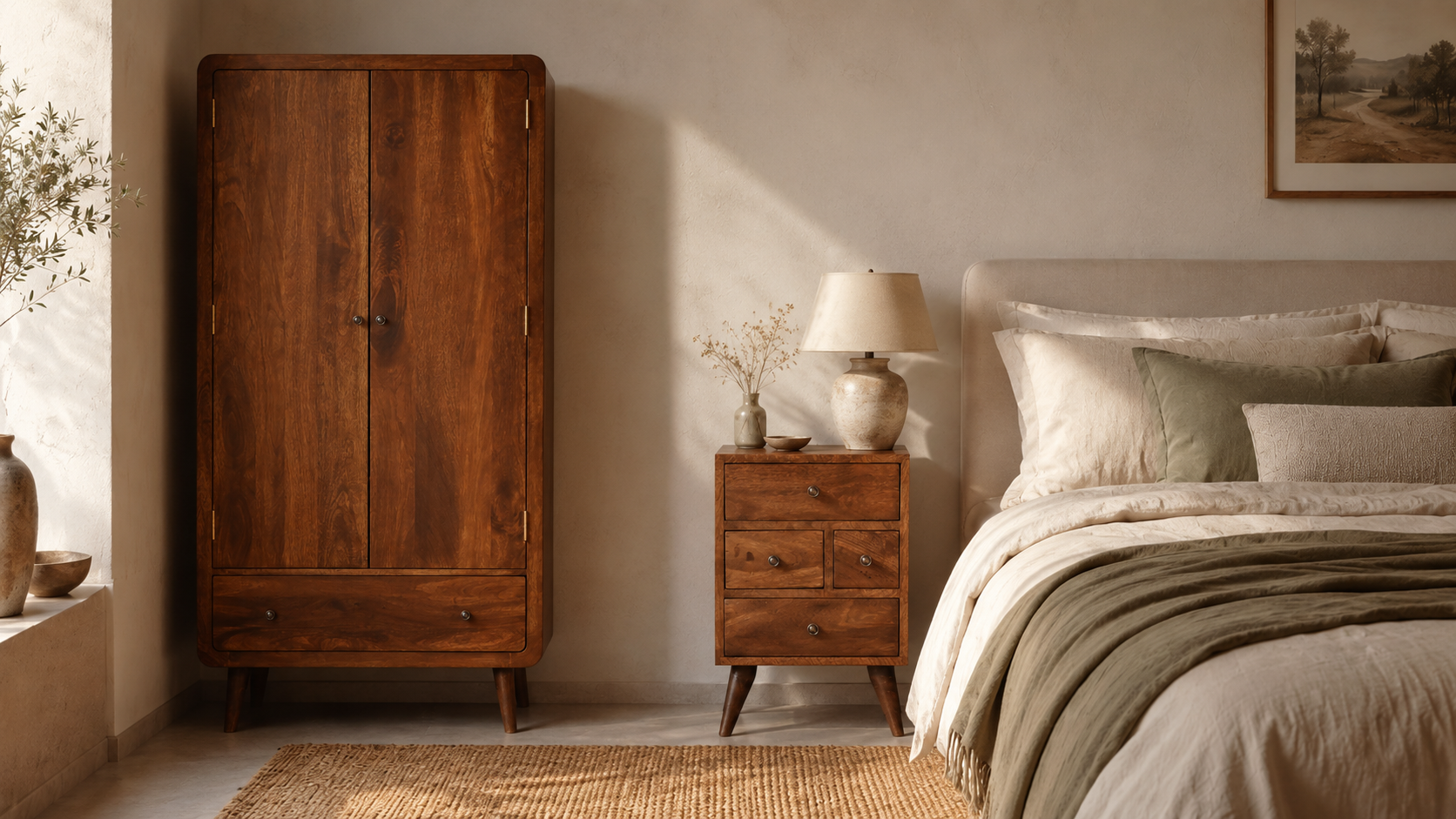
Mercer & Gray is one of the clearest examples of what buyers looking for handcrafted furniture in the USA are actually after. Every piece is built by skilled artisans using traditional woodworking techniques, drawing on 100% solid mango wood and other responsibly sourced timbers, including acacia, sheesham, oak, and pine. The customization options go deeper than most brands offer: finishes, paints, fabrics, inlays, and carvings are all available through a dedicated swatch library, so the piece you receive is tailored to your space rather than borrowed from a catalog.
Because each piece is shaped by hand, natural variation in grain, tone, and texture means no two Mercer & Gray pieces come out exactly alike, that's a structural reality of handcrafted production, not a marketing line. Each order also contributes to the Tree-a-Day Project, planting one tree per purchase as part of the brand's reforestation commitment. Free shipping across the United States is included on every order, removing a cost barrier that other makers often pass directly to the buyer.
Other trusted names in American handcrafted furniture
Several other makers have built strong reputations in this space, each serving a slightly different aesthetic and price point. Vermont Woods Studios partners with over 40 Vermont woodworkers and offers a lifetime guarantee on its solid hardwood collections. Maiden Home produces direct-to-consumer handcrafted pieces from North Carolina and Virginia, eliminating showroom markup without cutting corners on construction. The Amish Furniture Factory in Ohio builds hand-assembled pieces using traditional tools and minimal mechanization, producing furniture with an understated richness that holds up for decades.
These brands are worth knowing. The right choice depends on your aesthetic, your timeline, and how much control you want over the final result. Buyers who prioritize deep customization, responsibly sourced materials, and free nationwide delivery on heirloom-grade pieces will find Mercer & Gray a strong fit for those specific needs.
What you're actually paying for: price ranges explained
Dining tables, bedroom pieces, and chairs
Handcrafted solid wood furniture from American makers sits in a predictable price band once you understand what's driving the numbers. Dining tables typically run from $2,500 to $5,000 and above, depending on wood species, dimensions, and finish complexity. Bed frames and dressers generally range from $1,400 to $4,400. Chairs tend to land between $700 and $900 each for quality handcrafted construction.
These figures reflect real materials, real labor, and real time. They also reflect the fact that you're not paying for advertising budgets, warehouse overhead, or global retail markups. Consider a solid walnut dining table alongside a live-edge oak bed frame: the materials alone, responsibly sourced hardwood, kiln-dried and hand-selected, represent a meaningful portion of that cost before a single joint is cut. The price is the cost of the piece and the craft behind it, full stop.
Why the math looks different when you think in decades
A $300 flatpack dresser that needs replacing every four years costs more over a 20-year period than a $1,800 solid wood piece that outlasts the house it's in. That's straightforward math, not a soft argument. Handcrafted furniture from American makers also holds resale value in ways that particleboard furniture cannot. A well-maintained solid walnut dining table sells on the secondary market for a meaningful fraction of its original price. Particleboard and flatpack pieces, by contrast, tend to have little to no resale value once they've left the store.
The higher upfront price is the cost of not buying the same thing twice. For buyers ready to invest in pieces that become part of a home rather than a cycle of replacements, the pricing reflects exactly what they're getting.
Lead times and how to plan your timeline realistically
What average production windows look like
Custom handcrafted furniture orders in the USA typically take 6 to 14 weeks to build, depending on the maker, the complexity of the piece, and current order volume. Standard pieces like chairs and smaller side tables tend to land on the shorter end of that window. Large dining sets, custom beds, and specialty finishes push toward 12 to 16 weeks when you factor in finishing, curing, and freight preparation. Some makers offer quick-ship programs for pre-configured pieces, which can compress the window to around four weeks.
Mercer & Gray's production timeline reflects its bespoke approach, with lead times communicated during the ordering process. That transparency matters: the last thing you want is to commit to a custom piece and receive vague answers about when it will arrive.
The factors that stretch or compress your wait
Peak seasons, primarily early spring and fall, drive up order volume and can add several weeks to any maker's queue. Design complexity plays a significant role: intricate carvings, custom inlays, and multi-piece sets require considerably more hands-on time than simpler builds. Material sourcing adds another variable as well, since select hardwoods need proper drying and inspection before work can begin.
The practical guidance is to count 3 to 4 months back from your desired delivery date when planning a custom order, and to add a buffer for white-glove delivery scheduling. If you're furnishing a specific room for a specific date, factor that lead time in before you browse, not after you've already fallen in love with a piece.
Shipping, delivery, and what to expect at your door
Standard freight vs. white-glove service
Furniture shipping in the USA breaks into two main categories. Smaller items, typically under 150 pounds and shipped via parcel carriers, generally run $50 to $200. Larger handcrafted pieces ship via LTL freight, which costs between $300 and $600 depending on distance and typically requires lift-gate service if your home doesn't have a loading dock. White-glove delivery is the premium tier, running $150 to $500 per shipment, and includes in-home placement, unpacking, and assembly.
For high-value solid wood furniture, white-glove delivery is worth factoring into your budget from the start. A piece that took 12 weeks to build and costs $3,000 deserves to arrive properly handled. Dedicated delivery crews handle fewer pieces per route and are accountable for the full handling chain, which meaningfully reduces the risk of transit damage compared to unmanaged freight.
What free shipping actually means for buyers
Some handcrafted furniture brands, including Mercer & Gray, offer complimentary shipping across the United States. That's a meaningful financial advantage on items that would otherwise carry $300 to $600 in freight costs. It also signals that the brand has built its delivery infrastructure thoughtfully rather than treating shipping as an afterthought or a profit center.
When comparing makers, look closely at what the shipping policy actually covers: whether packaging is reinforced for transit, whether there's dedicated customer support for delivery issues, and whether the delivery method matches the value of the piece being shipped. Free shipping on a $2,000 dining table is a genuine benefit. Free shipping on a flatpack dresser is a baseline expectation. Those are not the same thing.
How to choose the right maker and place your first order
Questions worth asking before you commit
The right maker for your home isn't necessarily the most recognized name. Start by asking whether pieces are built to order or pulled from warehouse stock. Ask about the specific wood species used and whether joinery is mechanical or hand-cut. Find out whether finishes are low- or zero-VOC, what the warranty covers, and whether the brand handles delivery damage directly.
These questions separate makers who stand behind their work from those who don't. A confident maker answers all of them clearly and without hesitation. Vague answers about materials or deflection on warranty questions are signals worth taking seriously before you spend $2,000 or more on a single piece.
Customization, bespoke quotes, and your next step
If you want handmade furniture in the USA that's genuinely tailored to your space, most reputable handcrafted makers offer some level of customization. Mercer & Gray goes further than most: its swatch library lets you specify fabrics, finishes, paints, inlays, and carvings, giving you meaningful control over the final result, something that's rare at this price point.
For standard collections, the ordering process is straightforward. For bespoke pieces, reaching out directly with your dimensions and finish preferences is the best starting point. The goal is simple: furniture that fits your life and lasts long enough to become a genuine part of it.
The honest end of the choice
U.S.-made handcrafted furniture has never been easier to find from makers who are genuinely worth trusting. Skilled craftspeople building pieces designed to last are more accessible than they were a decade ago, and the buyers seeking them out have stopped apologizing for caring about quality. If you've read this far, you're probably in that second group.
The choice comes down to what you actually value: a piece you'll replace in five years, or one you'll still be proud of in twenty years. Mercer & Gray and the other makers covered here represent the honest end of that choice. Browse the collections, request a swatch, or reach out about a custom piece. The furniture waiting for your home is a different category entirely from anything a flatpack box ever held.