

The Ultimate Guide to Solid Wood Durability
Most people assume solid wood furniture lasts longer because it feels heavier, or because it costs more. Those aren't wrong instincts, but they're incomplete ones. Solid wood durability is a structural science, and understanding it changes how you buy, how you care for what you own, and how long your furniture actually survives. The grain matters. The joints matter. The species you choose matters more than almost anything else.
This guide covers all of it: how cellular structure creates real-world resilience, which species are worth the investment, how joinery mechanics determine whether a piece holds up for decades or falls apart in five years, and what refinishing can actually recover. Whether you already own solid wood or you're deciding whether to buy it, this is the information that makes the difference between a good decision and an expensive mistake.
Why solid wood durability outlasts almost everything else in your home
The role of grain density in long-term strength
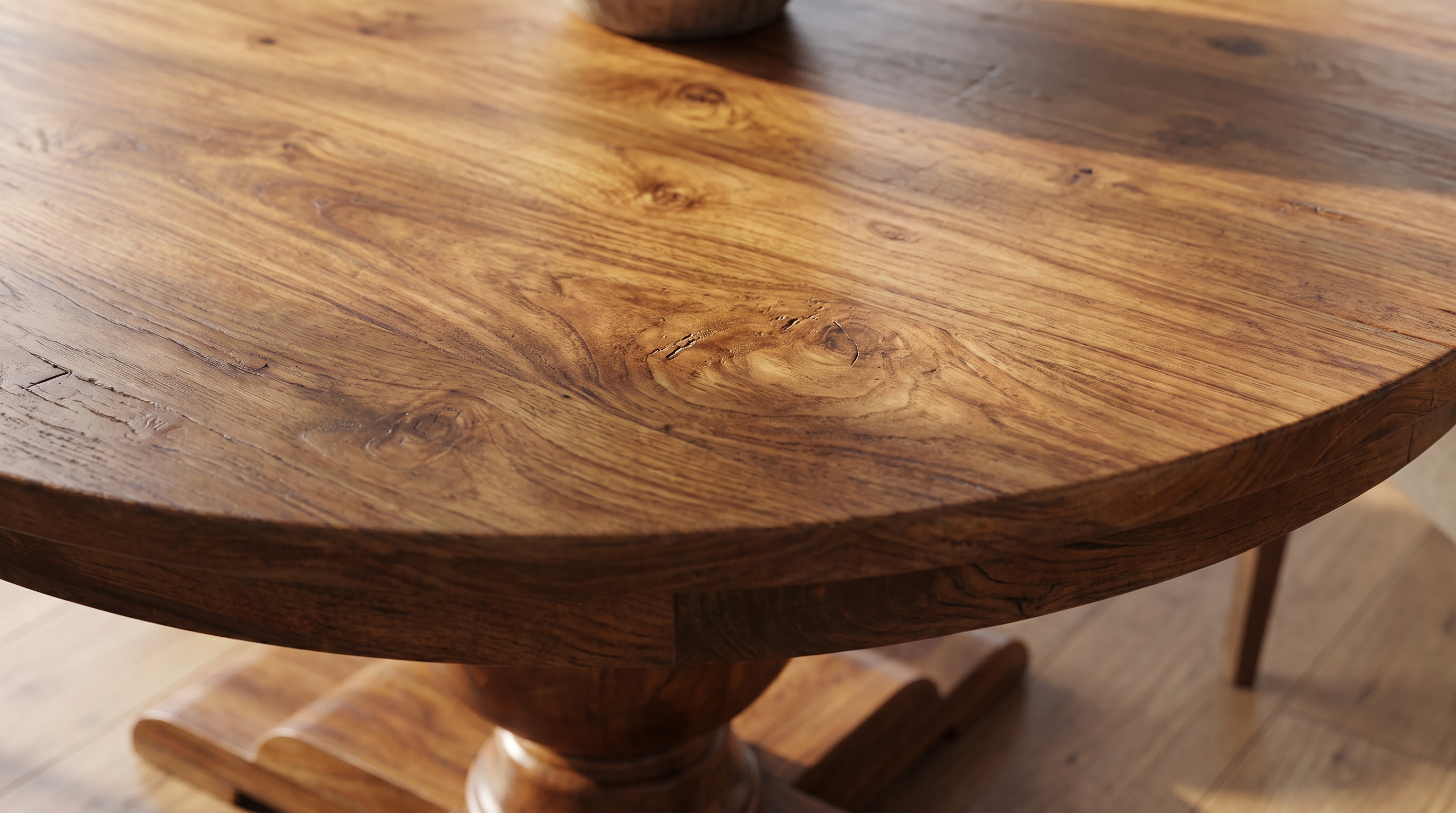
Tightly packed wood grain cells create a naturally dense structure that resists compression, impact, and flex over years of daily use. Dense grain also means fewer voids for moisture to infiltrate, and moisture infiltration is one of the leading causes of structural failure in furniture over time. Compare this to particleboard or MDF, where the original cell structure is broken down and reconstituted. That process significantly reduces native grain continuity and leaves a material that depends largely on adhesive binders rather than fiber strength, a meaningful distinction when you're evaluating long-term structural performance.
The difference isn't subtle. A piece built from genuine solid timber resists the kinds of slow, cumulative stress that destroys manufactured board products. Every time you sit down hard on a chair, every time a table leg flexes under an uneven load, that stress has to go somewhere. In a dense-grain board, it distributes. In particleboard, it concentrates at the glue lines and eventually separates them.
How cellular structure creates built-in resilience
The natural compression strength of solid timber comes from continuous wood fibers running through the full length of the piece. When stress is applied, it distributes across the entire board rather than concentrating at a single point. Traditionally constructed solid wood furniture has demonstrated far greater longevity than low-cost engineered or fastener-assembled pieces, a difference rooted in material mechanics, not marketing. The durability of solid timber isn't a claim; it's a mechanical property baked into how the material grows.
Solid wood longevity also benefits from this structure's relationship with moisture. While wood does expand and contract seasonally, that movement happens predictably and consistently across the whole piece. With the right care, it's manageable. With engineered alternatives, once the adhesive layers delaminate, there's no recovery.
Hardness ratings and what they actually predict about solid wood durability
Janka hardness numbers that tell you what a species can withstand
The Janka hardness scale measures the force required to embed a steel ball halfway into a wood surface. It's the industry standard for predicting how well a species will resist denting, scratching, and wear in furniture and flooring applications. The numbers tell you a lot: Hickory sits at 1,820 lbf, Hard Maple at 1,450, White Oak at 1,360, Black Walnut at 1,010, and Cherry at 995. Eastern White Pine bottoms out at 380 lbf. For high-use surfaces, 1,200 lbf is the widely cited practical threshold where you start getting meaningful protection against daily wear, though real-world performance also depends on finish type, construction quality, and how the piece is used.
Below that threshold, you'll see dents from normal use. Above it, the surface holds up under chairs dragging, keys landing, and the full catalog of daily household activity. That said, species hardness is one factor in a larger picture. Species choice is the first and most consequential decision you make when buying solid wood, but it works best when paired with quality construction and consistent care. For a deeper look at how Janka ratings compare across common species, consult a Janka hardness and wood species guide for specifics on each wood's rating and real-world applications.
Why species choice determines how long a piece actually lasts
Hardwoods like oak, maple, walnut, and cherry can last 100 years or more with basic care. Pine, a softwood at the bottom of the hardness scale, typically maxes out at 15 to 30 years under the same conditions. That's not a small gap; it's the difference between an heirloom and a replacement purchase. Species selection is where real long-term value is either locked in or lost.
Mango wood is a less familiar species that deserves more attention in this conversation. With a Janka rating of around 1,070 lbf, it sits above cherry and is comparable to walnut, with a tight, dense grain that makes it genuinely capable of heirloom-grade construction. At Mercer & Gray, mango wood anchors our furniture collections because of how the material performs structurally, the density, grain integrity, and hardwood lifespan it delivers make it a deliberate choice, not a compromise. If you'd like a broader evaluation of whether solid wood is the right purchase for your needs, see our article "Solid Wood for Furniture: Is It Worth It?"
The joinery techniques that separate lasting furniture from pieces that fail early
Traditional joints built for stress and movement
Mortise and tenon, dovetail, and box joints are the structural backbone of quality solid wood furniture. These joints work by creating interlocking geometry that handles lateral stress, weight bearing, and the natural seasonal movement of wood without pulling apart over time. The tenon, a projecting tongue of wood, fits into a matching mortise recess. Stress distributes across the full wood-to-wood contact surface rather than concentrating at a single point. This is engineering, not just craft tradition.
The geometry of a well-cut mortise and tenon joint means the longer and tighter the tenon fit, the greater its resistance to the bending forces that eventually destroy most furniture connections. Woodworking engineers have established through testing that rectangular tenons provide roughly double the structural capacity of round configurations. The shape matters as much as the material.
Why handcrafted construction outperforms factory fastener assembly
Modern production furniture relies on staples, cam locks, and glued MDF dowels. These fastener-based assemblies concentrate all stress at a small metal point. Over years of daily use, that concentration works against the connection: fasteners loosen, cam locks strip, and glued dowels shear at the joint line. Certain traditional joint configurations, particularly wedged and pegged mortise-and-tenon variants, are known to become more secure over time. As wood compresses and settles, the joint tightens rather than loosening.
Construction method matters as much as species when evaluating solid wood furniture durability. In many cases, superior joinery can overcome lower species hardness, a pine table built with genuine mortise and tenon joinery will often outlast a hard maple piece assembled with cam locks and staples. The mechanical advantage of interlocking wood-on-wood geometry is that significant, though performance always depends on the specific joint configuration and how the piece is used. For a buyer-focused perspective on evaluating solid wood construction when you're shopping, read our "Why Buy Solid Wood Furniture? Is It Worth It?" guide.
Solid wood vs engineered wood: where each one actually wins
Moisture resistance and dimensional stability
Engineered wood wins on moisture stability. Its cross-grain layered core resists expansion and contraction in humid environments better than solid wood, making it the practical choice for basements, kitchens, and installations over concrete. Solid hardwood performs best in stable, climate-controlled interiors where humidity stays between 40 and 60 percent. That's a genuine tradeoff, not a flaw in either material. Matching the product to the installation environment is the right framework.
For most living spaces, bedrooms, dining rooms, and offices, that humidity range is easily maintained. The moisture advantage of engineered wood only becomes decisive in environments where climate control is limited or absent. For a clear, side-by-side look at how engineered wood and real solid wood compare across common use cases, see this comprehensive comparison of engineered wood vs. real solid wood.
Wear resistance and long-term refinishing potential
That comparison between solid and engineered wood looks very different when measured over 75 to 100 years instead of 10. A standard 3/4-inch solid hardwood floor can be sanded and refinished 4 to 7 times over its lifetime, with each sanding removing roughly 1/32 inch of wood. The engineered alternative's veneer layer, typically 2 to 4 millimeters, allows one to two refinishes at best. Thin veneers can't be touched at all. Over a full century of use, that gap explains why refinishing solid wood floors remains a viable option in historic homes while engineered products from the same era have often been replaced multiple times.
Refinishing solid wood: what you actually get from each sanding cycle
How plank thickness determines your refinishing ceiling
A standard 3/4-inch solid hardwood plank has approximately 5/16 inch of usable wood above the tongue-and-groove. Industry guidelines generally set the absolute minimum remaining thickness for a safe refinish at 1/16 inch, with most professionals preferring to stop at 1/8 inch to preserve structural integrity. With each sanding cycle removing about 1/32 inch, that math gives you 4 to 7 cycles under normal conditions, though some sources cite up to 10 in carefully managed circumstances. Thinner planks have far less runway: 1/2-inch boards support 2 to 3 refinishes, and 3/8-inch boards effectively offer one cycle at most, sometimes none.
This is why plank thickness is worth asking about before you buy. Not all solid hardwood floors are equal at the point of purchase, and that initial thickness difference compounds enormously over a 50-year ownership horizon. For practical examples and professional perspectives on how many times solid hardwood floors can realistically be sanded, review industry guidance on how many times solid hardwood floors can be sanded.
What refinishing actually restores, and when to call a professional
A refinishing cycle strips oxidation, surface scratches, and UV damage, exposing fresh wood that accepts a new protective coat. This is the mechanism by which solid hardwood can be returned to near-original condition multiple times across a century of use. The process is genuinely restorative, not cosmetic. Species hardness affects how well the surface tolerates sanding, with oak and maple handling repeated cycles better than pine. Prior refinishing history matters too. Before committing to a sanding cycle, have a professional measure the remaining wear layer. It's a low-cost step that prevents an irreversible mistake.
Maintenance habits that protect decades of investment
Maintaining solid wood durability: moisture, UV, and temperature
Moisture is the single biggest threat to solid wood over time. Warping, buckling, and rot all trace back to sustained water infiltration or extreme humidity swings. Maintain indoor humidity between 40 and 60 percent and temperature between 60 and 80 degrees Fahrenheit year-round. In dry winter months, a humidifier prevents boards from shrinking and creating gaps between joints. For surfaces near windows, UV-blocking film or regular application of a protective topcoat guards against the cracking and surface fading that direct sunlight accelerates over years.
These aren't complicated interventions. Small, consistent habits like these are likely to make a meaningful difference in how long a piece survives, whether that's 30 years or well past 100.
Physical protection and routine cleaning
Place furniture pads under every leg and check them periodically, since they have a way of working loose over time. A no-outdoor-shoes policy on hardwood floors eliminates one of the most consistent sources of scratching and surface damage. Clean up spills immediately, since surface finishes aren't waterproof indefinitely, especially near seams and joints where moisture finds the fastest path into the wood. Wipe down solid wood furniture with a slightly damp cloth and dry it immediately, without saturating the grain.
An annual inspection of the finish coat is the lowest-effort, highest-return maintenance habit you can build around solid wood furniture care. Catch a failing finish early and a topcoat application is quick and inexpensive. Miss it, and you're dealing with moisture damage in the wood itself.
Solid wood durability isn't a marketing word
It's grain density resisting compression. It's joinery distributing stress evenly across a joint surface rather than concentrating it at a metal fastener. It's a 3/4-inch wear layer that can be sanded fresh four to seven times across a century of use. When you understand these mechanisms, the value of a well-built solid wood piece becomes specific and verifiable rather than vague and intuitive.
Get three decisions right, species hardness, construction method, and basic environmental care, and the furniture largely takes care of itself. Buying well once, then maintaining it consistently, is simpler and cheaper than replacing furniture every decade. The person who understands solid wood durability at this level isn't just buying furniture. They're deciding how they want their home to age.
At Mercer & Gray, every piece we build reflects these principles: solid mango wood selected for its density and grain, handcrafted by skilled artisans using traditional joinery techniques, finished with care and built to be passed on. If you're ready to buy once and buy well, browse our collections and find the piece built to last as long as your home. For practical buying tips before you purchase, check out our Solid Wood Furniture for Sale: A Buyer's Guide.


