

Article: Wood Furniture Lifespan: How Long Should It Really Last?
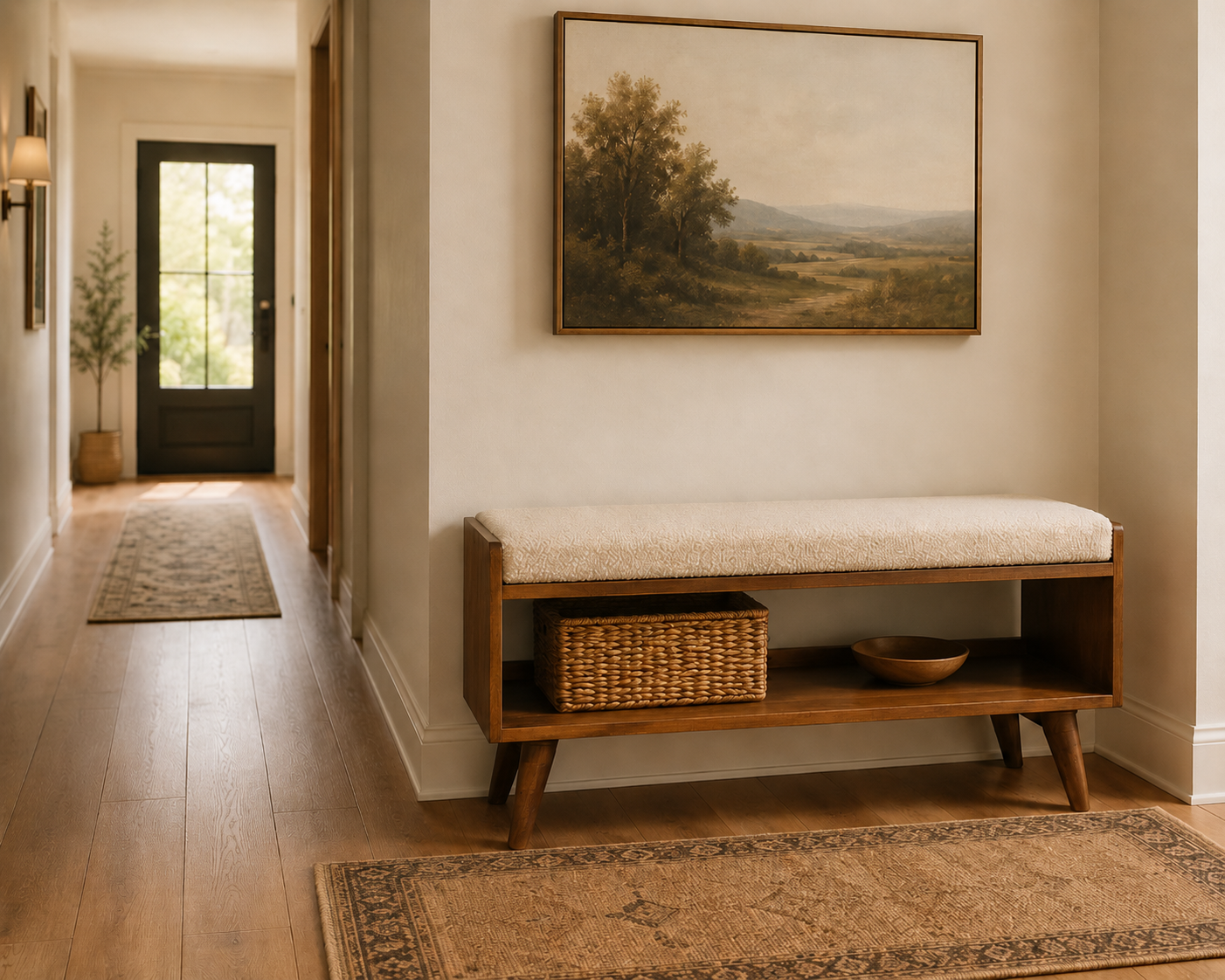
Wood Furniture Lifespan: How Long Should It Really Last?
Most people shop for furniture by looking at the price tag. Very few stop to ask the more important question: how many years will this thing actually last, and what does that work out to per year?
That shift in thinking changes everything. A $350 flatpack dresser that lasts six years costs more annually than a $900 solid hardwood piece that lasts 50-plus years. The math is straightforward, but it's rarely presented at the point of purchase, which is why so many homes cycle through the same cheap furniture every few years without noticing the pattern.
Wood furniture lifespan varies enormously depending on material, construction, and care, ranging from as little as five years for mass-produced flatpack to well over a century for quality solid hardwood. This guide breaks down exactly what those numbers look like, what shortens or extends them, and how to make a smarter long-term buying decision.
What Wood Type Actually Predicts Lifespan
Before anything else, the material determines the ceiling. No amount of care extends cheap engineered wood to the lifespan of solid hardwood; the construction simply doesn't allow it. Understanding the realistic range for each category gives you the baseline you need before comparing price tags.
The five main material categories break down like this:
- Solid hardwood (oak, walnut, teak, mango) reliably lasts 30 to 100-plus years when maintained properly. Antique furniture still in daily use today is almost always solid hardwood.
- Solid softwoods like pine range from 20 to 40 years, strong enough for normal use, but the softer surface dents and scratches more easily over time.
- Engineered wood and plywood construction typically holds for 15 to 25 years, after which warping, swelling, and joint failure become increasingly common.
- Veneer furniture falls in a similar band of 10 to 25 years, limited by its thin surface layer.
- MDF and particleboard flatpack, the material behind most mass-market retail, typically lasts 5 to 15 years under regular household use.
Solid Hardwood: The Benchmark Everything Else Is Measured Against
Solid hardwood isn't just durable in the abstract. It's structurally repairable, refinishable, and capable of being passed between generations without replacement. A scratched oak table can be sanded and re-oiled. A stained walnut sideboard can be stripped and refinished. The material's depth allows for intervention that simply isn't available with thinner or composite constructions.
Mango wood sits comfortably in the upper range of hardwoods, with a Janka hardness rating of 1,070 lbf, comparable to oak. With proper care and a stable indoor environment, mango wood furniture can realistically last 50 to 100-plus years, making it a genuine long-term investment rather than a scheduled replacement. It's the primary timber in Mercer & Gray's collection for exactly that reason.
Engineered Wood and Flatpack: Where the Lifespan Math Gets Uncomfortable
The core problem with engineered wood and flatpack isn't just a shorter lifespan, it's that failure tends to be irreversible. MDF swells from moisture and cannot be meaningfully refinished. Particleboard joints strip and crumble under repeated stress. Once structural failure begins in these materials, repair is rarely cost-effective. A drawer front that separates from its base or a shelf that sags under load can't be glued back to full strength. The furniture's useful life effectively ends, and replacement is the only practical option.
How Construction Quality Decides Real Durability
Material alone doesn't determine lifespan. Two pieces made from the same timber can have dramatically different life expectancies based on how they're put together. This is where handcrafted and mass-manufactured furniture diverge most sharply.
The joints in quality furniture aren't decorative; they're structural. Traditional joinery techniques like dovetail joints and mortise-and-tenon joints create mechanical interlocks that tighten under stress rather than loosen. Dovetails are considered nearly impossible to pull apart and require no screws or nails to hold. Mortise-and-tenon is the standard for structural frames and table legs, holding rigid under decades of weight and daily use. These joints also provide more surface area for adhesive bonding, compounding their strength over time.
The Joints That Signal a Piece Built to Last Generations
When examining furniture, dovetail joints in drawer boxes and mortise-and-tenon frames are the clearest signals of heirloom-grade construction. They require skilled craftsmanship to execute correctly and are rarely found in mass-produced pieces, where speed of assembly drives every decision.
What to Look For (and Avoid) When Buying
Dowel joints and screws are the most common alternatives in manufactured furniture. Both rely heavily on adhesive and mechanical fasteners that can corrode, loosen, or strip over time, particularly in high-movement areas like drawers and legs. Wobble in a frame when lightly pressed, or staple-and-glue drawer boxes, are reliable indicators of a piece that will struggle to reach the 15-year mark.
The Environmental Factors Quietly Cutting a Piece's Life Short
Even a well-built solid hardwood piece will age prematurely in the wrong environment. Wood responds to its surroundings, expanding and contracting with changes in moisture and temperature. Understanding those limits keeps the responses within safe ranges.
Humidity is the most critical factor. Relative humidity below 35% causes wood to dry out, crack, and loosen joints. Above 65%, wood swells, warps, and becomes susceptible to mold. The stable range to maintain is 40 to 55%, which is achievable in most homes with a basic humidifier or dehumidifier depending on climate. Dramatic seasonal swings matter as much as averages, so consistency is the real goal.
The Humidity and Temperature Ranges Your Furniture Can Handle
Temperature extremes accelerate the same stress patterns. Sustained exposure below 50°F or above 95°F can cause finish failure and internal cracking over time. Short excursions outside that range are less damaging than prolonged exposure, but heating vents and air conditioning units placed close to furniture create localized extremes that compound normal seasonal changes. A simple fix is keeping furniture away from direct airflow sources and tracking indoor humidity with an inexpensive digital hygrometer.
Sunlight and Moisture: The Two Fastest Ways to Age Wood Prematurely
Direct sunlight causes the wood surface to yellow and degrades protective finishes, often unevenly, leaving visible fading lines where light hits repeatedly. Even indirect UV exposure changes the tone of most wood species over years. Beyond sunlight, standing moisture from spills, plant pots without saucers, or persistently humid rooms is the fastest path to irreversible swelling and finish failure. Neither issue is dramatic on its own. It's the accumulation over years that becomes visible.
The Real Cost of Cheap Furniture Over Time
Here's the calculation most furniture ads skip over. Take a flatpack dresser at $350 with a realistic lifespan of seven years: replaced three times over 21 years, that's $1,050, plus delivery fees, disposal costs, and assembly time each cycle. A solid hardwood dresser at $900 with a 50-year lifespan works out to $18 per year. The flatpack costs roughly $50 per year before any extras.
The upfront price is not the full price. Solid wood furniture that can be refinished, repaired, and handed down rarely enters that replacement cycle at all. Running the numbers, the break-even point for solid hardwood typically falls around year eight to ten, after which the annual cost becomes decisively lower than any flatpack equivalent.
Running the Numbers: Flatpack vs. Solid Wood Over Two Decades
Across a 20-year window, a household that consistently buys flatpack furniture for its major rooms will spend significantly more than one that invests in solid hardwood pieces once. The gap widens when you factor in refinishing costs, substantially cheaper than full replacement, and the retained value of quality solid wood pieces, which often hold 70 to 85% of their value after 15 to 20 years, while flatpack depreciates to near zero.
Why Mercer & Gray's Mango Wood Pieces Are Built for the Long Math
Mercer & Gray builds each piece from 100% solid mango wood and other responsibly sourced hardwoods, using traditional joinery techniques including mortise-and-tenon frames and dovetail drawer boxes. Every piece is individually crafted, which means construction quality stays consistent from one piece to the next rather than varying across a production run. For a buyer running the 20-year cost calculation, that upfront investment looks very different on a per-year basis, and the ability to refinish, repair, or customize a piece further extends the value over time.
When to Maintain, Repair, or Replace
No piece lasts indefinitely without some attention. Knowing when to intervene, and what kind of intervention makes sense, is what separates furniture that lasts 30 years from furniture that gets donated at year ten.
The most common failure modes in wood furniture are loose joints, finish degradation, minor water damage, and veneer delamination. For solid hardwood, nearly all of these are repairable. Loose joints can be re-glued. Worn finishes can be sanded and refinished, with professional refinishing typically running $335 to $969 depending on the piece and its condition. Minor water damage on solid wood can often be dried, filled, sanded, and re-sealed. The critical factor is structural: if the wood itself is solid, repair is almost always viable. If the core is MDF or particleboard and moisture has reached it, the swelling and softening that follows is not reversible.
The Most Common Ways Furniture Fails (and What They Cost to Fix)
Loose hardware and hinges are the most frequent early-stage issue, low cost to address ($50 to $150 per area) and a clear signal to act before the underlying joint weakens further. Finish degradation comes next: chipping, peeling, or fading that's purely cosmetic and addressed through refinishing. Veneer delamination on engineered furniture can be repaired with epoxy and re-finishing at moderate cost, but the underlying material limits how many times that intervention is practical. Severe water damage to a particleboard or MDF core typically means replacement; the structure is compromised beyond repair.
A Simple Rule for the Repair-or-Replace Decision
If the frame and core material are solid wood and the issue is cosmetic or joint-related, repair is almost always the right call. If the core is engineered wood and the failure is structural, swelling, warping, mold, replacement is the more honest choice. The question to ask isn't "can this be fixed?" It's "is the material underneath worth fixing?"
The Long Math Is Worth Doing Once
Wood furniture lifespan isn't a fixed number. It's a range shaped by material, construction, environment, and care, and the gap between the top and bottom of that range is measured in decades, not years.
The most useful reframe is cost per year of use. A piece that lasts 50 years and costs twice as much as a flatpack alternative isn't expensive; it's a fraction of the long-term cost. Solid hardwood, built with traditional joinery and maintained within reasonable humidity and temperature ranges, doesn't just outlast engineered alternatives. It develops character, holds its value, and can be repaired rather than discarded.
That's the standard Mercer & Gray builds toward. Not furniture for a few years, furniture for a few decades. If you're done replacing things and ready to buy once, browse the collections and run the numbers for yourself. For more on expected lifespans and long-term care, see resources on how long solid wood pieces last and managing indoor humidity to protect heirloom furniture.
Finally, if you're comparing the math at checkout, remember that a piece that lasts 50 years amortizes cost dramatically versus repeat replacements, that's the long game.


