What Really Determines Furniture Longevity?
Most people assume furniture just wears out. They buy a sofa, live with it for a few years, watch it sag and fade, and eventually haul it out to the curb. Then they do it again. And again. Rarely does anyone stop to ask whether the problem was the furniture or the decision that brought it home. Understanding furniture longevity changes that, it shifts the question from "when will this break?" to "what should I have bought instead?"
How long a piece lasts is not a matter of luck. It's a predictable outcome shaped by a handful of knowable variables: what it's made from, how it was put together, what protective finish it carries, and how consistently it's cared for. Once you understand those variables, the mystery disappears entirely.
This article covers all of it, realistic lifespan benchmarks by furniture type, the material and construction factors that set the ceiling, practical maintenance habits, and a clear framework for deciding when to repair versus replace. No guesswork. Just the information you need to stop replacing the same piece every five years. At Mercer & Gray, solid wood artisan construction sits at the center of everything we make, because these durability principles aren't theoretical. They play out in real homes, over decades, in the joints and surfaces and finishes of pieces built to last.
Furniture Longevity by Type: Realistic Lifespans
Sofas: the wide range between budget and quality
Budget sofas built with particleboard frames and low-density foam last roughly 3 to 7 years. Mid-range builds with plywood frames and standard foam push that to 7 to 12 years. Hardwood-framed sofas with high-density foam reach 12 to 20 years or more. Full-grain leather upholstery extends that further, it can last 25 years or longer with proper care, while bonded leather begins peeling and cracking in 3 to 7 years. That gap isn't trivial. Over 20 years of ownership, a buyer who replaces a budget sofa three or four times often spends more in total than someone who invested in quality upfront.
The practical takeaway: the upholstery you see is replaceable, but the frame underneath rarely is. When the frame fails, the sofa is finished regardless of what's on top. Frames are the primary structural element, repairing a failed one is often so costly or impractical that replacement becomes the only realistic option. For more on how frame material influences a sofa's service life, see this piece on the role of frame material in your sofa's longevity.
Wood furniture and dining tables
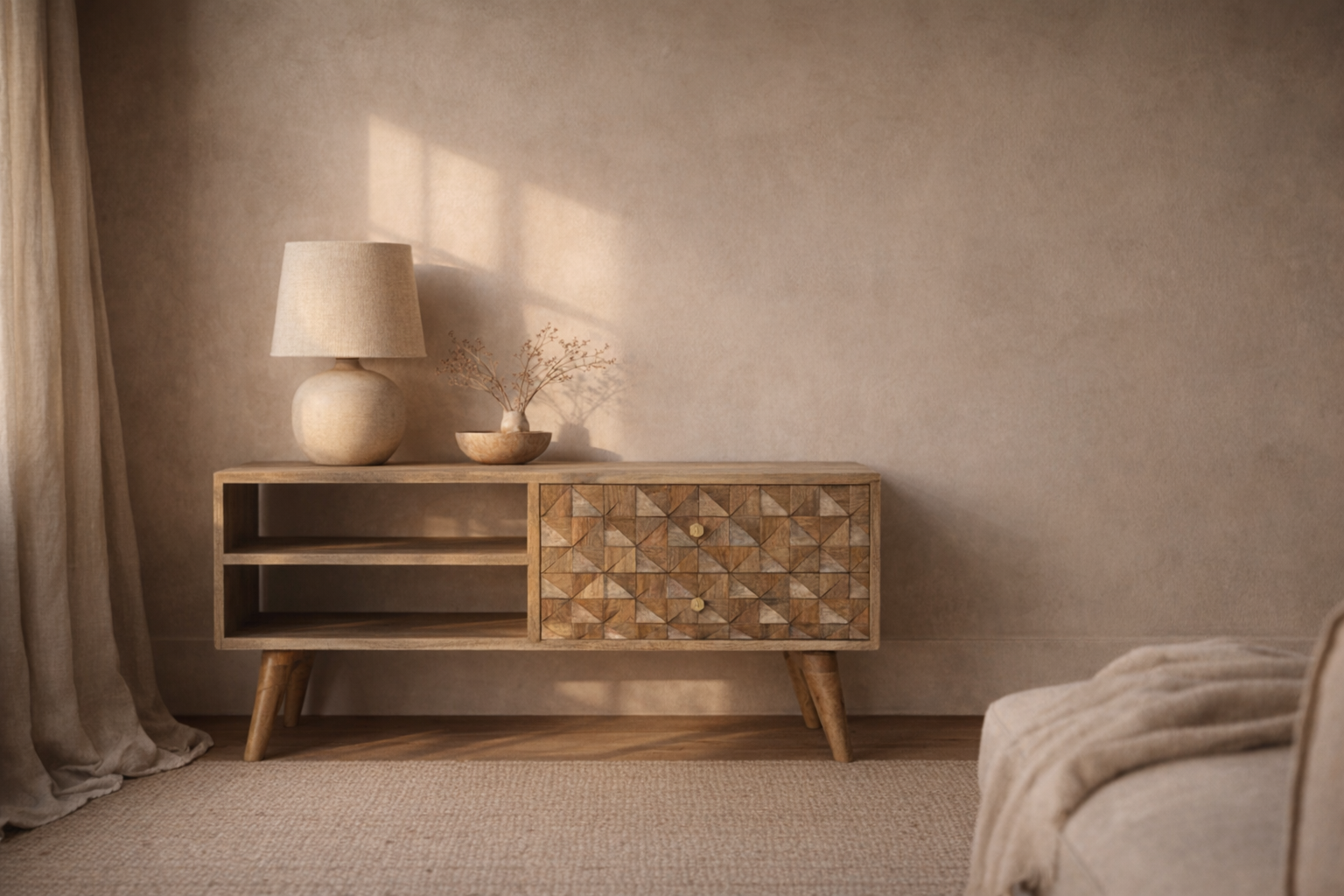
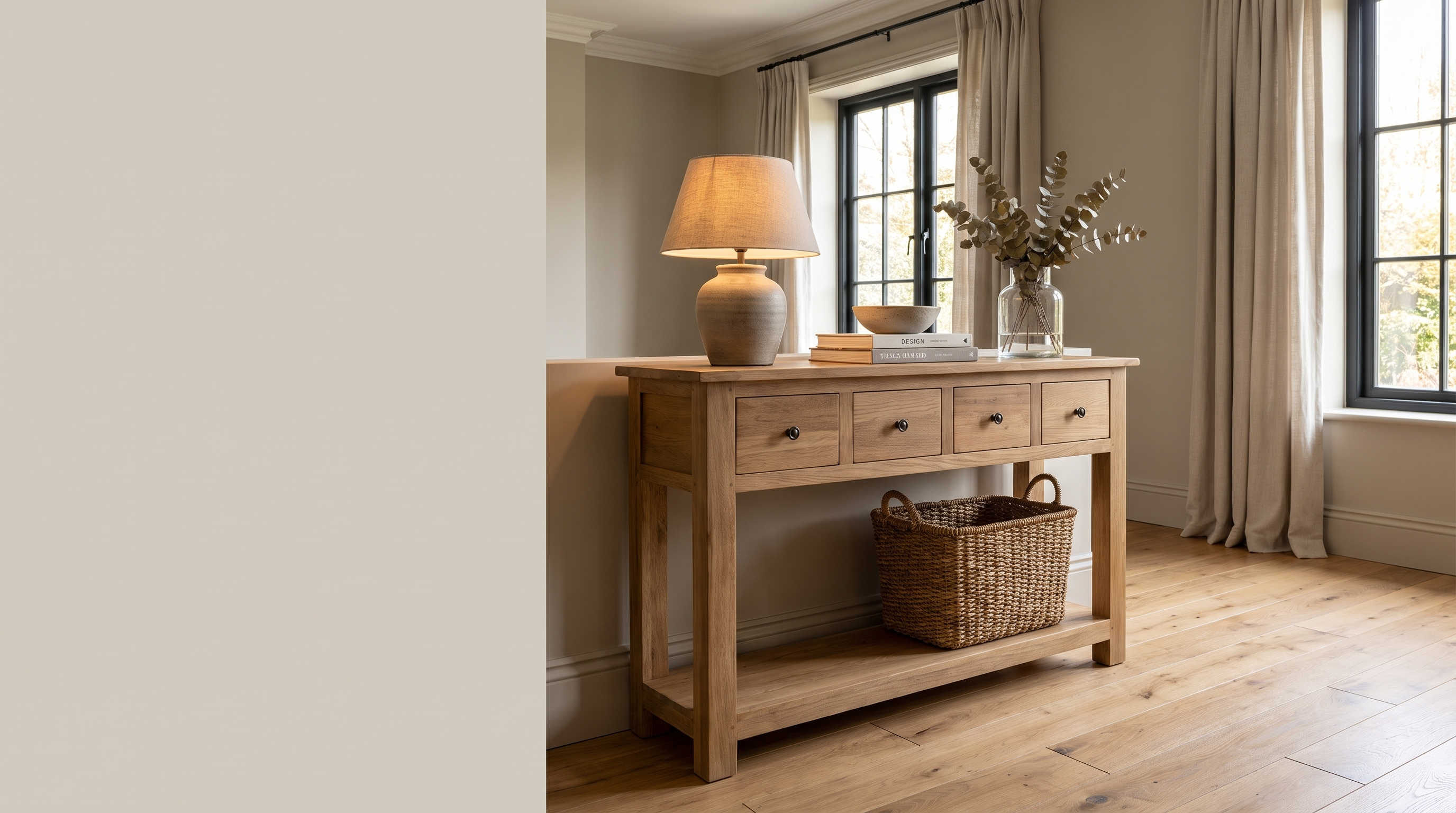
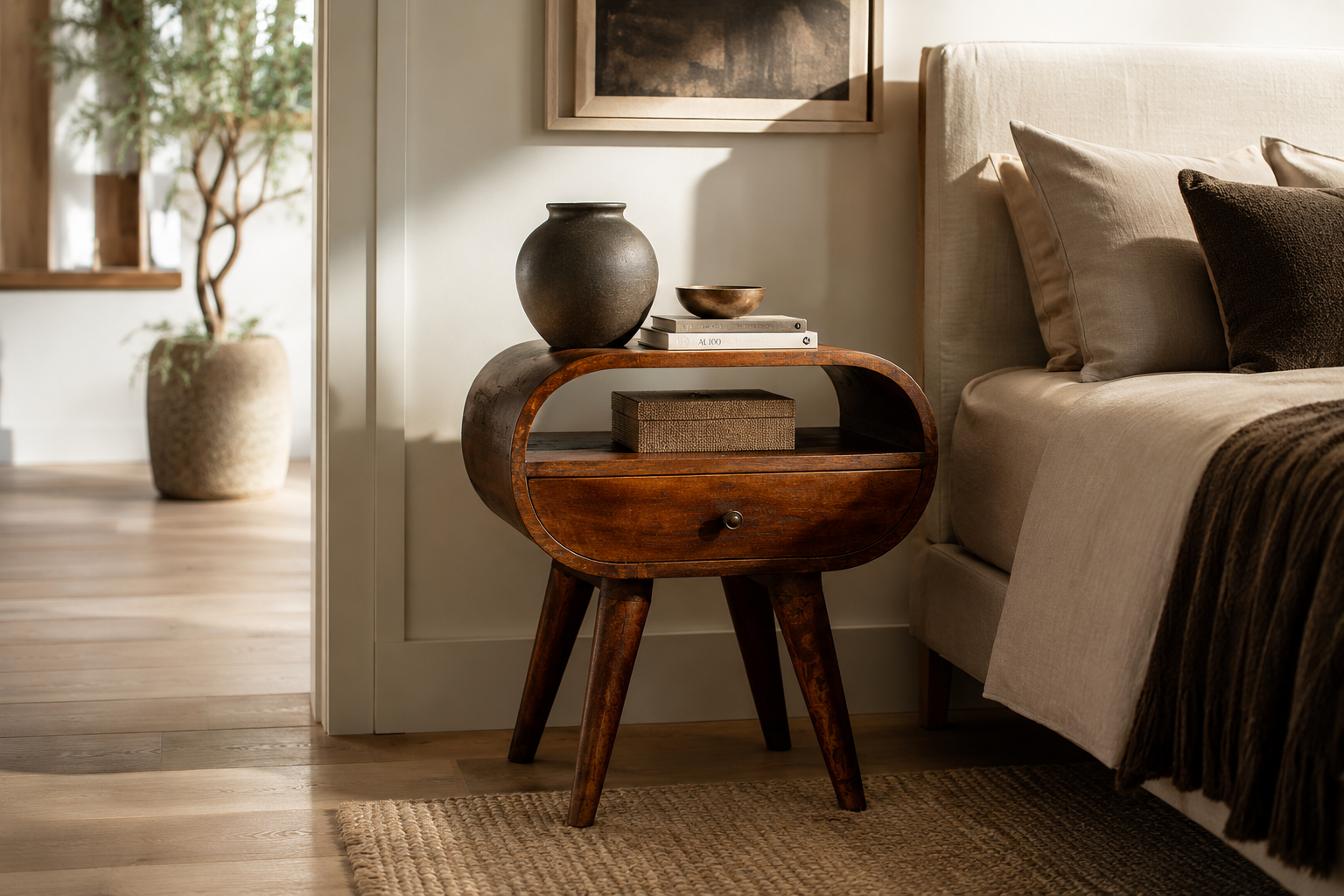
Solid hardwood furniture exists in a different category entirely. A well-built piece from kiln-dried hardwood, properly maintained, can outlast its owner. Industry benchmarks consistently place solid hardwood at 30 to 100-plus years of normal household use. By contrast, MDF and particleboard constructions average 5 to 15 years before joint failure, moisture swelling, or surface chipping renders them unusable. The material you start with sets a ceiling. Even careful maintenance cannot extend a particleboard table beyond the limits of its base material. There's no refinishing a swollen edge, no repairing a joint that has crumbled.
How Material Affects Furniture Longevity
Solid hardwood vs. engineered alternatives
Solid hardwood, whether oak, maple, mango, or walnut, consistently outperforms engineered wood in structural resilience, moisture resistance, and long-term repairability. The Janka hardness scale offers a useful benchmark: white oak scores 1,360 lbf, meaning it resists denting and stress far better than MDF, which has no meaningful Janka rating because it dents under sustained pressure and cannot recover. Kiln-drying is the differentiator within the hardwood category itself. By reducing wood's moisture content to roughly 6 to 8 percent before manufacturing, kiln-drying stabilizes the material against the expansion and contraction that causes joints to loosen and surfaces to crack over time. Particleboard has no equivalent path. Once it swells, chips, or fractures, it cannot be refinished or restored.
The upholstery spectrum
Full-grain leather is the most durable upholstery option at 20-plus years with proper care. Performance fabrics like Crypton and microfiber outlast standard cotton or linen blends by a significant margin, particularly in high-traffic homes. The key insight is that upholstery can always be replaced if the frame beneath it is sound. That makes the frame the true long-term investment, the fabric or leather covering is a secondary, more forgiving decision.
How Furniture Is Built: The Factor Most Buyers Never Check
Joints, frames, and structural integrity
Many buyers focus on surface finish and color and may overlook how the pieces are actually joined. That's where a great deal of the furniture longevity story lives. Corner blocks, mortise-and-tenon joints, and dovetail construction add structural rigidity that screws and staples alone cannot replicate. Mortise-and-tenon joinery creates a mechanical interlock that distributes stress across a large surface area and resists the lateral racking forces that cause frames to loosen over time. Furniture repair professionals consistently note that reinforced corner blocks make a meaningful difference in frame lifespan. Welded steel reinforcement in frames offers superior stability compared to bolted alternatives. These construction details are often not included on product pages, which is precisely why they're worth asking about directly.
Artisan-built vs. factory-assembled
This is where the gap between handcrafted and mass-produced furniture becomes most visible. When furniture is assembled by skilled craftspeople using time-honored joinery, the result is structural consistency that factory assembly lines cannot replicate at scale. It's not sentimentality. A handcrafted table built from solid hardwood using traditional joinery holds up for decades because the construction decisions behind it were made for longevity, not production speed. A flatpack equivalent, optimized for packaging efficiency and retail price points, reflects a different set of priorities entirely. The difference shows up years later, in the joints, in the surface, and in whether the piece is still standing.
What Finish Quality Actually Does to a Piece Over Time
The protective role of surface finishes
A finish is not decorative. It's a barrier. A quality oil, lacquer, or wax finish on solid wood slows moisture absorption, resists surface scratching, and reduces the expansion and contraction that causes joints to loosen over time. Pieces with thin or inconsistent coatings tend to show wear faster and require more frequent intervention to stay in good condition. The finish is the first layer of defense against the environment, and its quality matters as much as the wood beneath it.
Reading finish quality before you buy
There are practical cues worth checking at the point of purchase. Look for consistent sheen without bare or dull patches. Run your hand across the surface and feel for rough grain or inconsistency. Ask whether the piece has been properly sealed versus simply coated. Bespoke finishes, where you can choose among oil, wax, or lacquer to suit your specific home environment, tend to produce longer-lasting results than one-size-fits-all factory applications. A finish chosen for your home's humidity level and usage patterns simply performs better over time than a generic coating applied to every piece regardless of where it's going.
Furniture Maintenance Tips That Reliably Add Years to Any Piece
Wood furniture care routine
A consistent care routine for solid wood furniture is simple but frequently skipped. Weekly dusting with a damp microfiber cloth, followed immediately by a dry pass, removes abrasive particles before they scratch the finish. Monthly wipe-downs with a slightly damp cloth clear accumulated grime. Annual conditioning with a wood-specific oil replenishes moisture and helps prevent drying, cracking, and joint loosening over time. For a practical guide on maintenance steps and products, see our How to Take Care of Wood Furniture | Mercer and Gray guide. Keep pieces out of direct sunlight, which degrades both the finish and the wood grain at the cellular level, and away from heat sources like vents and radiators that accelerate drying.
Upholstered furniture care
Weekly vacuuming with an upholstery attachment prevents debris from working its way into fabric fibers and accelerating wear. Rotating and flipping cushions every three to six months distributes stress evenly across the fill and measurably slows sagging in high-use areas. Blot spills immediately rather than rubbing them, working from the outside of the stain inward. Schedule a professional deep clean annually, more frequently in high-traffic homes, for a thorough approach to cleaning and maintaining both upholstery and leather, consider this complete cleaning and maintenance guide. Apply a fabric protector spray every few years to maintain stain resistance and extend the life of the upholstery between cleanings.
Repair or Replace: How to Make the Right Call
Signs your furniture is worth saving
A piece made from solid hardwood with loose joints, worn upholstery, or sagging cushions is almost always worth repairing. These are surface-level failures on a structurally sound foundation, and they're far cheaper to address than most people expect. Minor repairs, including re-stuffing cushions, tightening joints, or reupholstering a seat, typically run $100 to $500. More involved restoration work ranges from $500 to $2,000. When the underlying frame is intact and the material is solid, repair consistently comes out ahead financially and practically.
When replacement makes more financial sense
The threshold is clear: if repair costs exceed 80 percent of the replacement price, replacement is the smarter call. Broken frames, severe water damage, exposed springs, and repeated structural failures on a budget-grade piece all point toward starting over. The important nuance is what you replace it with. Quality replacement furniture built from solid materials and proper construction starts the longevity cycle over at a much higher baseline than the piece being replaced. Investing in quality once, rather than replacing a budget piece repeatedly, is almost always the lower-cost outcome over a ten-year horizon.
The Decision You Make Once
Furniture longevity is not random, and it isn't mysterious. It's the product of deliberate decisions made at the point of purchase and sustained through consistent, simple care. The material sets the ceiling. The construction determines how close to that ceiling the piece actually gets. The finish and maintenance habits determine how long it stays there.
You now have a full picture: realistic lifespans by furniture type, the material and construction variables that matter most, the finish and care habits that extend service life, and a straightforward framework for repair versus replacement. What remains is applying it.
Buying well once is almost always cheaper, more sustainable, and less stressful than buying again and again. A piece chosen for what it's actually made of, how it was built, and what it takes to maintain it is a decision you make once and live with well. For guidance on choosing pieces that remain relevant and functional over time, see our piece on Timeless Bedroom Furniture: What to Look For. That's the real measure of furniture longevity: not how long it survives, but how little you have to think about replacing it.
Frequently Asked Questions About Furniture Longevity
How long do sofas last?
It depends primarily on frame material and foam density. Budget sofas with particleboard frames typically last 3 to 7 years. Mid-range plywood-framed sofas reach 7 to 12 years. Hardwood-framed sofas with high-density foam can last 12 to 20 years or more, and full-grain leather upholstery can extend that to 25 years with proper care. For additional lifespan estimates and context, read this article on how long sofas last.
What increases furniture longevity the most?
Material choice has the greatest impact, solid hardwood consistently outperforms engineered wood by decades. Construction quality (specifically joinery type and frame reinforcement) and a consistent maintenance routine are the next most significant factors.
How long does solid hardwood furniture last?
A well-built, properly maintained solid hardwood piece can last 30 to 100-plus years under normal household use, well beyond the lifespan of MDF or particleboard alternatives, which typically fail within 5 to 15 years.
When should I repair furniture instead of replacing it?
If the frame is structurally sound and made from solid wood, repair is almost always worth it. A useful rule of thumb: if repair costs are less than 80 percent of replacement cost, repairing wins financially. Loose joints, worn upholstery, and sagging cushions are all fixable; a failed frame generally is not.
What are the best furniture maintenance tips for wood pieces?
Weekly dusting with a microfiber cloth, monthly wipe-downs, and annual conditioning with a wood-specific oil form the core routine. Avoid direct sunlight and heat sources, and address spills immediately to protect the finish.