Warm Wood Entryway Decor Ideas for a Welcoming Home
Warm wood entryway decor ideas for a welcoming home start with a single honest choice: giving that first space the same consideration you'd give any room your guests will actually linger in. Before anyone sees your living room, notices the art on the wall, or catches the scent of a candle from the kitchen, they feel whatever that first space gives them. Most entryways say almost nothing, a bare wall, a single hook, maybe a mat that's been there since move-in. That's a missed opportunity worth fixing.
Warm wood changes a space more quickly than most other materials. It reads as natural and grounded in a way that paint colors and decorative objects alone can't replicate. It signals that someone made considered choices here. At Mercer & Gray, the entryway is the first room customers ask about when they're furnishing a new home, and it's almost always the most overlooked space in the house.
What follows is a practical guide to building an entryway that actually feels like something. You'll find guidance on wood species and finishes, how to size and choose anchor furniture, how to layer textures without clutter, how to light the space properly, and five complete styling setups you can replicate at any budget.
Warm wood entryway decor ideas: wood tones that actually feel warm (not all wood does)
Warmth in wood is not automatic. Walk into a room with pine shelving under cool fluorescent light and you'll feel nothing particularly inviting. The warmth you're after comes from a specific combination of species, grain, and finish working together.
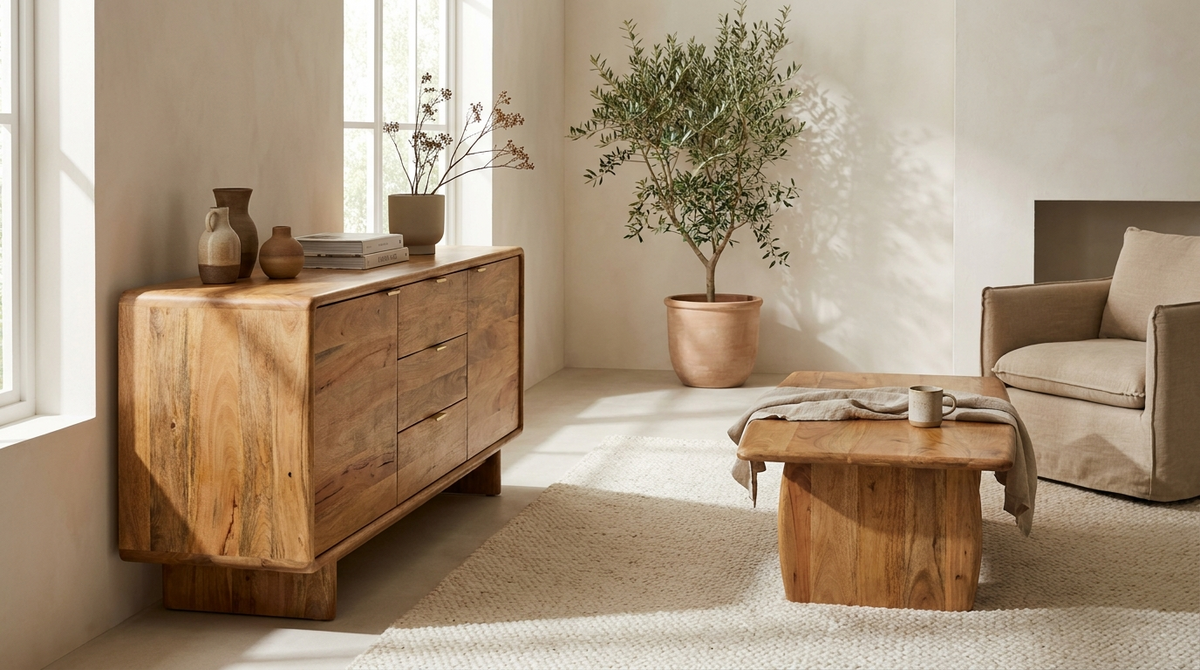
Red oak sits at the warmer end of the spectrum. Its amber, honey, and pinkish-red tones amplify natural light and create that enveloping glow that makes an entry feel intentional rather than purely functional. Mango wood occupies similar territory, its active grain and honeyed tones make each piece read as genuinely alive rather than uniform. White oak reads cooler and more neutral, which suits Scandinavian aesthetics well but works less effectively when you want a space that wraps around you. New, unfinished pine can trend lighter and less warm, though reclaimed pine is a different story: aged golden and amber tones from reclaimed boards can deliver real coziness, particularly in rustic or farmhouse setups. Walnut is rich and sophisticated, but its deep chocolate tones lean luxurious rather than warm, its naturally darker, cooler-brown character works against that amber-glow quality you're after in an entryway. For ideas on using darker tones and black furniture alongside warm woods, see Living Room Furniture Black: Warm, Timeless Ideas.
Mercer & Gray's entryway pieces use solid mango wood for this reason. The grain is active, the tones are honeyed, and the natural variation in each piece means no two consoles or benches look exactly alike. That sense of aliveness is what makes a space feel collected rather than purchased.
The finish matters as much as the species. Matte and low-sheen finishes absorb light gently and feel natural. High-gloss finishes reflect harshly and strip out the warmth entirely, making even beautiful wood look plastic. For entryways specifically, a durable matte sealant is the right call, it protects against moisture and tracked-in dirt without compromising the honest look of the wood. Reclaimed and hand-oiled finishes add further depth and patina that many designers prefer precisely because factory furniture rarely develops that same quality over time.
Choosing your anchor furniture piece (and getting the sizing right)
The anchor piece is the single decision that determines the feel of everything else. Get it right and the rest of the styling falls into place naturally. Get it wrong and no amount of accessories will save the space.
A console table is the more versatile starting point. It provides a surface for styling, holds a lamp or mirror above it, and keeps the floor visually clear. A bench works better when you genuinely need seating for shoe removal and when there's enough width to accommodate it without narrowing the walkway below 30 inches. In many medium to large entries, both pieces work together: a console table against the wall with a bench tucked alongside or perpendicular to it. Mercer & Gray's entryway collection includes both in solid mango wood, pieces that don't need to be dressed up to look considered.
Sizing is where most people get tripped up. For small or narrow entries, look for console tables at 12 to 16 inches deep and 30 to 36 inches wide. This keeps the walkway clear without sacrificing the surface area you need for a lamp and a few objects. Medium entries open up to 36 to 48 inches wide and 14 to 18 inches deep. Large or open foyers can work with 48 to 60-plus inch pieces at depths up to 24 inches, which gives you genuine room to layer decor with intention. For a practical reference on common measurements and depth recommendations, see this guide to console table dimensions.
Before you order anything, tape out the dimensions on the floor with painter's tape. It takes three minutes and prevents expensive mistakes. A piece that looks proportional on a product page can feel overwhelming once it's in your actual hallway.
Layering textures for warm wood entryway ideas
Wood on its own reads beautiful but still. What makes an entryway feel alive is the contrast of soft against hard, woven against smooth, organic against refined. The challenge is adding those layers without tipping into clutter.
A reliable starting point pairs complementary materials: linen, rattan, and greenery. A linen cushion on a bench, a rattan tray on the console surface, and a trailing plant in a ceramic pot each add a different texture without competing. These materials share the same warm, natural undertones as the wood, so they reinforce the palette instead of interrupting it. A golden pothos or a parlor palm works especially well in low-light entries, and both look natural beside warm-toned wood. For more low-light-friendly options, check this list of the best low-light houseplants.
On the console surface, group items with varied heights, a tall lamp, a medium vase, and a small bowl or key tray creates visual rhythm without clutter. Keep the surface edited. Two or three well-chosen objects read as intentional; a half-dozen objects read as a surface that just collects things.
A runner rug grounds the console and extends the warmth of the wood down to the floor. Choose a flatweave or tightly knotted runner for an entryway: it lies flat, handles foot traffic well, and doesn't create a trip hazard. Baskets tucked underneath a bench or console do double duty, hiding shoes and everyday clutter while adding another layer of texture at floor level. This is practical design, and it works.
Lighting for warm wood entryway decor ideas
The right lighting can make ordinary wood look extraordinary. The wrong lighting flattens even the most beautiful grain and drains the warmth out of the entire space. The variable that matters most is color temperature.
Warm white bulbs sit between 2,700 and 3,000 Kelvin. This is the range that makes wood tones look rich and amber rather than flat and gray. Anything above 3,500K starts to cool the space down and works against every warm design choice you've made. LED bulbs in the 2,700K range are widely available, dimmable, and energy-efficient, for most entryways, this is the ideal starting point. If you want a deeper technical read on how color temperature affects perception, see understanding color temperature of LED lighting.
For fixture choices, match the scale of the light to the ceiling height. Low or standard ceilings work best with flush-mount or semi-flush fixtures that provide even light without visually compressing the space. Taller foyers can carry a pendant or chandelier, which frames the console below it beautifully. Narrow hallways benefit from wall sconces mounted at around 60 to 65 inches from the floor, a commonly used guideline among lighting professionals. They provide targeted warmth without taking up floor or surface space. For shopping and inspiration on suitable fixtures, explore these entryway lighting options.
A table lamp on the console itself adds the most intimate layer of light and is the single easiest upgrade in any entryway. It gives the space a lived-in quality that overhead fixtures alone never achieve. For overall brightness, aim for 800 to 1,100 lumens from a single lamp source, or 1,500 to 3,000 total lumens in a larger foyer with multiple fixtures.
Five complete warm-wood entryway setups to replicate
These setups combine everything above into concrete starting points. Each one is designed around a real space constraint and a distinct aesthetic, so find the one closest to your situation and use it as a blueprint.
Setup 1: The small-space solution (narrow hallway under four feet wide)
A 12-inch-deep console table in a warm honey-toned wood, one wall sconce mounted above it at roughly 62 inches, a slim flatweave runner, and a single rattan basket tucked underneath for shoes. Keep the console surface minimal: one small lamp, one ceramic bud vase, a key bowl. Restraint is what makes narrow spaces feel calm rather than cramped.
Setup 2: The practical medium foyer (standard entry with real storage needs)
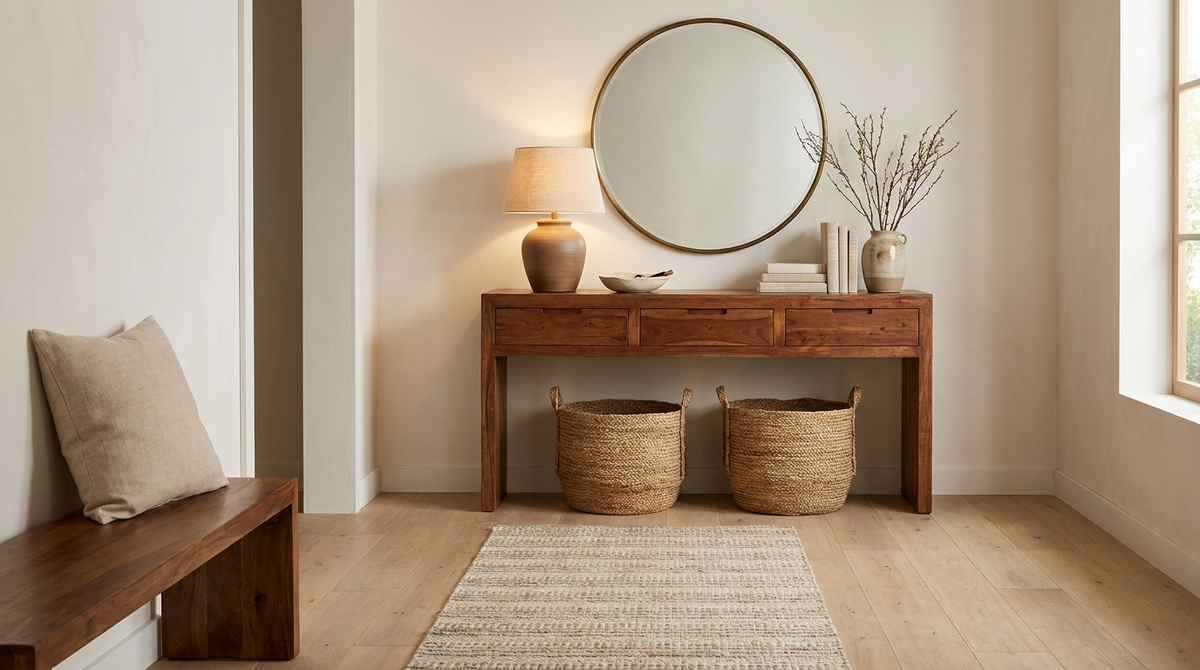
A 36 to 42-inch console table paired with a solid wood entryway bench alongside it. Under-bench baskets handle shoes and bags. Add a linen cushion on the bench, a wooden mirror frame above the table, and a trailing plant on one side of the console. This setup works hard without looking like it's trying to. The woven mirror frame and natural cushion tie back to the wood without repeating it.
Setup 3: The grand open entry (large foyer with room to make a statement)
A 54 to 60-inch console table with a solid wood-framed mirror centered above it and a table lamp on each end. A large jute area rug grounds the space, a tall potted plant occupies one corner, and a wooden coat stand nearby completes the layout. This is the setup where scale and layering work together, the natural wood decor for the foyer carries its own weight without needing anything fussy.
Setup 4: Rustic warm (reclaimed textures and aged finishes)
A hand-oiled console with visible grain and patina. Wire hooks mounted above for coats and bags, galvanized baskets below, a worn leather tray holding keys and mail on the surface. An amber glass lamp and a chunky knit basket finish the setup without it looking staged or put together in an hour. This rustic-warm approach is one of the most forgiving entryway styles to execute because the imperfection is part of the point.
Setup 5: Modern warm (clean lines, warm tones, minimal accessories)
A smooth mango wood console with clean edges and a natural oiled finish. One architectural lamp, one small trailing plant, nothing else on the surface. A simple flatweave runner and a frameless round mirror above keep the look refined but never cold. This is the setup for people who believe less, done well, is the whole point.
Where to start and what to budget
The console table or bench is the single purchase that sets the entire entry. Everything else is layered around it. Buy the anchor piece first with genuine care, then add the rug, the lamp, and the baskets in that order. In practice, those three additions tend to deliver the most noticeable visual improvement relative to what they cost. For help choosing the right solid wood anchor piece, consult our Solid Wood Furniture for Living Room Buying Guide.
If you're working with a tighter budget ($200 to $500), a mid-range console at roughly $100 to $200 paired with a $40 to $60 runner and a few rattan baskets gives you a solid foundation, note that specific prices vary by retailer and fluctuate with sales, so treat these as approximate ranges. The mid-range tier ($500 to $1,200) opens up solid wood options with more considered accessories and proper lighting. At the investment level ($1,200 and up), you're looking at handcrafted, bespoke pieces built to last decades.
Mercer & Gray's entryway collection sits in that investment tier. Pieces are made from 100% solid mango wood, customizable in finish and detail, and can be tailored to match any of the five setups described above. Every order also supports the Tree-a-Day Project, which means your purchase contributes directly to reforestation, something worth considering when the whole point is bringing natural materials into your home thoughtfully. You can also explore Solid Wood Furniture for Kitchen Life | Mercer and Gray to see how similar pieces perform in other rooms.
The entry sets the tone for everything that follows
Your entryway is not a storage problem to solve. It's an opportunity to set a feeling before a single other room is seen. Warm wood does that better than almost any other material because it's honest, natural, and enduring. It doesn't require trend-cycling or seasonal overhauls. It just asks to be chosen well and lit properly.
Start with the right anchor piece. Layer textures with intention. Keep surfaces edited. Light the space warmly. These principles hold whether you're working with a narrow hallway or an open foyer, a $300 budget or a $3,000 one.
Use these warm wood entryway decor ideas for a welcoming home as a practical starting point, not a rigid prescription. If you want a piece built to last and customized to your exact space, explore Mercer & Gray's entryway collection and use the bespoke options to dial in the finish and detail that fits your home. Or take one of the five setups above and start there. Either way, the goal is simple: make people feel something good the moment they walk in. That's worth getting right.