Mango Wood Furniture Pros and Cons Explained
Mango wood furniture pros and cons explained, here's what you actually need to know before you buy. The material shows up in solid wood searches constantly, and the interest makes sense. It's warm, accessible, and photographs beautifully. But most of what you'll read online either oversells it or glosses over its real trade-offs. Neither serves you well when you're about to spend serious money on a piece you're hoping to keep for years.
So here's the full picture: where mango wood genuinely earns its reputation, where it falls short, and what questions to ask before you commit. One thing worth knowing upfront: the material itself is only part of the story. How the furniture is built and finished matters just as much as what it's made from. That distinction will matter by the time you reach the end of this article.
What makes mango wood worth taking seriously
Durability and Janka hardness
Mango wood has a Janka hardness rating of 1,070 lbf, placing it on equal footing with ash and slightly harder than cherry. For indoor furniture, that's more than enough. Dining tables, dressers, coffee tables, none of these need the extreme density or moisture resistance of teak to hold up under everyday use. Mango sits in a reliable mid-tier alongside more expensive hardwoods and handles normal wear without drama. For a technical breakdown of mango's physical properties, see the detailed reference on the Wood Database.
The comparison to oak is worth understanding. Oak rates between 1,200 and 1,400 lbf, so it is harder. Acacia, often sold as a premium alternative, can reach 1,700 lbf or more. Mango doesn't compete on raw hardness, but for indoor living spaces, that difference rarely shows up in real use for typical dining and living room furniture. You're not building a ship deck. You're furnishing a dining room.
Sustainability
The sustainability story is one of the most honest ones in the furniture industry. Mango trees are planted for fruit production. When they stop bearing fruit, usually after 15 to 20 years, they're harvested for timber. The wood is generally sourced as an agricultural byproduct rather than from virgin forest, which is meaningfully different from teak, a species that is far more resource-intensive to source responsibly. When you see labels like "reclaimed agricultural byproduct," that's what they mean, and it's accurate for the overwhelming majority of supply chains. Certifications worth verifying include FSC (Forest Stewardship Council) and Fair Trade, both of which can confirm responsible sourcing practices and fair working conditions at the source.
Grain and aesthetics
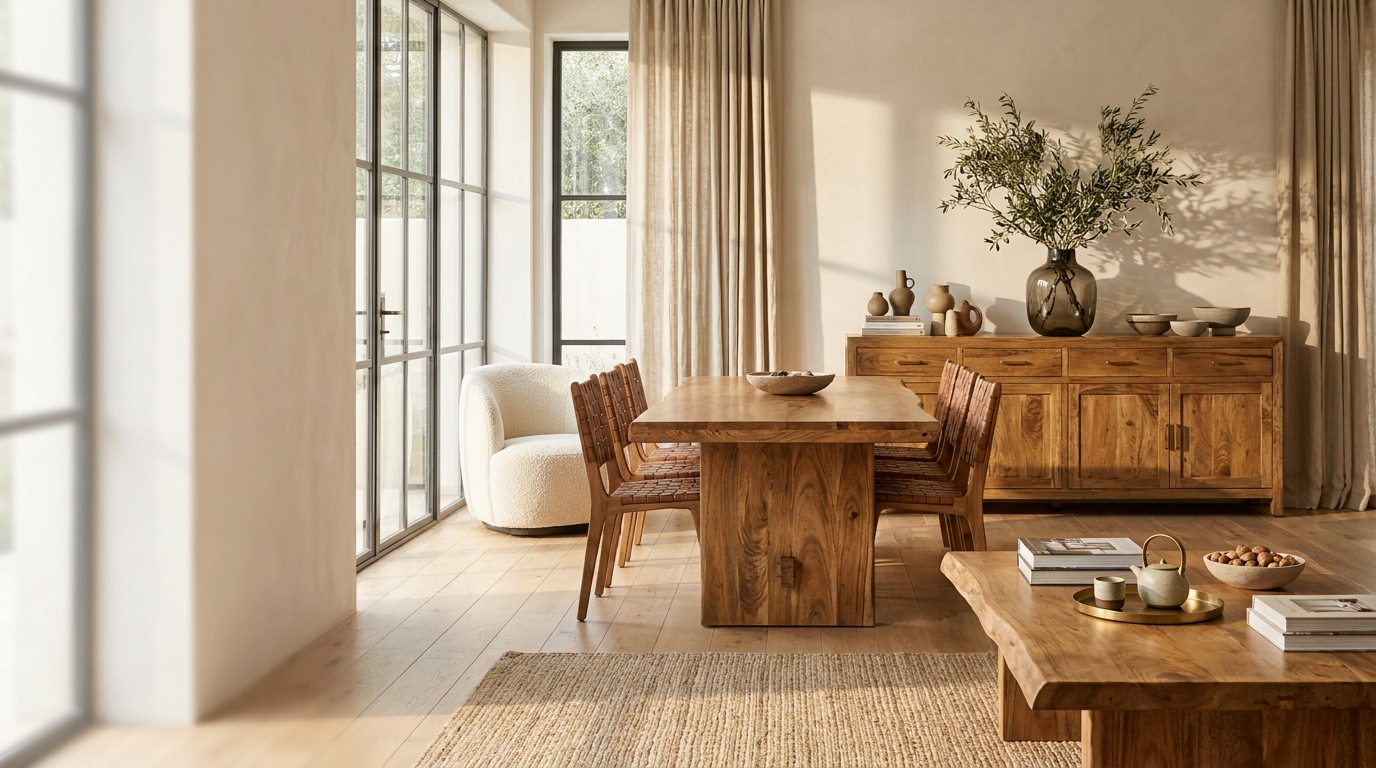
Then there's the grain. Mango has swirling, unpredictable patterns and warm, honey-to-dark-brown tones that give finished pieces genuine character. It costs less than oak while delivering comparable visual richness. Artisan finishing that protects the surface while keeping that grain visible is the hallmark of well-made mango furniture, the wood does the visual work, and the craftsmanship makes sure it lasts. This is what separates a piece worth owning from one that looks good in a product photo and nothing else.
Where mango wood genuinely falls short
Moisture is mango wood's real vulnerability, and many sellers understate this. The wood expands and contracts with humidity changes, and if it isn't properly finished or placed in a stable environment, warping becomes a real possibility over time. In climates with significant seasonal humidity swings, like much of the southeastern United States, this deserves serious attention. Poorly finished mango furniture placed near a radiator, heating vent, or air conditioning unit can develop warping or cracking within a few years. For an independent take on the common trade-offs, see a practical overview of the pros and cons of mango furniture.
This isn't a reason to avoid mango wood. It's a reason to understand it. Properly seasoned and well-finished mango furniture handles normal indoor conditions without issue. The problem is improperly dried wood sold at a low price by sellers who don't disclose the trade-offs. Seasoning, the controlled drying process that brings the wood's moisture content into balance with its intended environment, is where most warping problems either begin or get prevented. Ask about it.
Color variation is the other thing worth knowing. Two mango wood pieces from the same collection can look noticeably different. The grain is never uniform, and the tone shifts across individual boards. For many buyers, that's part of the appeal. For someone furnishing an open-plan space and hoping for a consistent, matched look, it can be a source of frustration. This isn't a defect; it's the nature of solid wood. But it's better to know before you buy than after the second piece arrives.
Untreated or poorly finished mango is also vulnerable to woodworm and fungal issues. A proper factory finish seals the surface and significantly reduces these risks; when evaluating any piece, ask specifically what finishing method was used and whether the wood was kiln-dried. Cheaper pieces that don't disclose their finishing process are the ones most likely to present problems down the line.
Mango wood pros and cons compared to sheesham, acacia, and oak
Sheesham, also called Indian rosewood, is the closest comparison. It sits in a similar price bracket, rates around 1,700 lbf on the Janka scale, and is slightly more moisture-resistant. Mango has a more dramatic grain pattern; sheesham tends toward a finer, more uniform look. Neither is strictly better. If you're placing the piece in a humid room without much environmental control, sheesham has a practical edge. If the grain pattern is what draws you to solid wood in the first place, mango often wins that comparison on aesthetics.
Acacia is significantly harder, rating well above 1,700 lbf, and handles outdoor conditions that would damage mango. For indoor furniture, though, that extra density isn't doing much practical work, and mango's lower price point makes it the smarter buy when the piece is going into a living room or bedroom. The day-to-day durability difference between mango and acacia, indoors, is minimal for most buyers.
Oak is harder, more moisture-resistant, and carries a longer track record as a furniture material. It's also meaningfully more expensive. Mango fills a clear niche: solid wood character, honest craftsmanship, accessible pricing. That value holds as long as the piece lives indoors in a reasonably stable environment. If you're ready to invest at the oak price point, oak is worth it. If you want solid wood quality without that premium, well-made mango furniture is a legitimate alternative.
What mango wood furniture actually costs
Coffee tables in mango wood typically run between $230 and $460. Dining tables fall in the $300 to $800 range depending on size and finish. Dressers generally land between $250 and $600. Those ranges position mango as one of the most accessible solid wood options in the US market, sitting well below comparable oak pieces and roughly in line with acacia.
The affordability comes from supply, not from compromised quality. Mango trees are grown across India and Southeast Asia at scale for fruit production, which means the timber is genuinely abundant. A well-crafted mango wood piece from a skilled maker will outlast cheap flatpack furniture many times over, even at a fraction of what oak alternatives cost. The price reflects the supply chain, not the craftsmanship or the material's capability. That's a distinction worth holding onto when you're comparing quotes.
Keeping mango wood furniture in good shape for years
The finish you start with shapes everything that follows. Oil and wax finishes, like tung oil, Danish oil, or beeswax, penetrate the wood and enhance its grain. They feel natural and are easy to repair, but they require regular reapplication and aren't ideal for high-traffic horizontal surfaces. For dining tables, lacquer, varnish, or polyurethane creates a harder protective barrier that resists moisture and daily wear far better. If you're buying pre-finished furniture, ask what was applied. A seller who can answer that question confidently is selling furniture built to last. For guidance on appropriate coatings, see recommendations for the best finishes for mango wood furniture and an overview of what finish you should have on your table from a tablemaker's perspective (what kind of finish should I have on my table).
The maintenance routine is straightforward. Dust weekly with a dry soft cloth. Reapply oil or wax every few months to prevent the wood from drying out, more frequently in dry climates or with heavy daily use. Address spills immediately, since moisture left sitting on the surface is the most common cause of long-term damage. Skip abrasive cleaners and harsh chemicals entirely. None of this is excessive; it's just the normal care any solid wood piece deserves.
Placement matters more than most people realize. Keep mango wood furniture away from direct sunlight, radiators, and heating vents. In humid climates, running a dehumidifier in the room makes a measurable difference in how the wood behaves over time. Use coasters and placemats on all horizontal surfaces as a habit. Maintain indoor humidity between roughly 40% and 50% for optimal stability, most sources suggest this as an ideal target for solid hardwood indoors, with 30% as a workable lower bound. These aren't complicated precautions; they're just good practice for any wood you're asking to last decades.
Questions worth asking any seller before you commit
Ask whether the piece is solid mango wood throughout or a veneer over a cheaper substrate. Ask about the joinery: dovetail and mortise-and-tenon joints signal proper craftsmanship; staples and glue alone signal the opposite. Ask whether the wood was properly dried and seasoned before construction, since inadequately seasoned mango is the starting point for most warping issues down the line. If you want a practical checklist for evaluating construction and materials, see How to Find Solid Wood Furniture.
Ask what finish was applied and what maintenance it requires over time. A confident, specific answer to that question is a good signal. Vague answers are not. Ask whether the brand can confirm the wood is a genuine agricultural byproduct and whether they carry FSC or Fair Trade certification. These questions aren't bureaucratic box-checking; they tell you whether the seller actually knows their supply chain.
Getting clear answers before you buy meaningfully improves the odds of reaching the 15- to 20-year lifespan that well-maintained mango furniture is capable of, rather than replacing a piece that disappoints you halfway there.
Making the call: is mango wood good for furniture?
Mango wood is a genuinely strong material for indoor use. It's sustainably sourced, beautifully grained, and priced accessibly relative to comparable hardwoods. Its two main limitations, moisture sensitivity and natural color variation, are real but manageable with proper finishing, reasonable placement, and basic upkeep. It isn't right for every buyer or every environment. For most indoor living spaces in a stable climate, it holds up well. If you want a broader look at solid wood choices and whether they're worth the investment, read Why Buy Solid Wood Furniture?
The material matters, but craftsmanship matters more. The best mango wood furniture comes from makers who understand both, who season the wood correctly, finish it properly, and build it with joinery that holds. Ask good questions, understand what you're buying, and a well-made mango piece will reward that care for a long time.
Overall, the mango wood pros and cons covered above show it's a strong indoor option when it's properly finished and built by people who know the material. If you want to see what that looks like in practice, explore the collections at Mercer & Gray. Every piece is handcrafted from 100% solid mango wood by skilled artisans; full bespoke customization is available, and shipping is free across the United States. The grain is real, the construction is built to last, and the questions covered above are ones we're glad to answer directly.
Frequently asked questions about mango wood furniture
Is mango wood good for furniture?
Yes, for indoor use. With a Janka rating of 1,070 lbf, mango is hard enough for dining tables, dressers, and case pieces. Its main limitation is moisture sensitivity, which proper finishing and stable indoor placement address effectively.
How long does mango wood furniture last?
Well-made, properly finished mango furniture typically lasts 15 to 20 years or more with standard indoor care. Pieces exposed to humidity swings or inadequate finishing may fall short of that range.
How do you maintain mango wood furniture?
Dust regularly, reapply oil or wax every few months, keep the piece away from direct heat and sunlight, and wipe spills immediately. Maintaining indoor humidity between 40% and 50% does more for long-term stability than almost anything else.
How does mango wood compare to oak or sheesham?
Oak is harder and more moisture-resistant but costs significantly more. Sheesham is slightly harder than mango and a bit more moisture-tolerant, making it a closer match in price. Mango's grain is typically more dramatic than sheesham's. For most indoor environments, all three are serviceable, the choice comes down to budget, aesthetics, and placement conditions.