How to choose furniture that lasts in a busy household
Start With How the Room Will Actually Be Used
A polished home still has to accommodate muddy paws, snack spills, homework, guests, and furniture used from morning through evening. The best way to choose furniture that lasts in a busy household is to match each piece’s construction, materials, upholstery, proportions, and care requirements to the work it will actually do.
There is no single indestructible material or marketing label that guarantees long service. A solid wood dining table, a well-constructed veneer cabinet, and a carefully specified performance textile can all be excellent choices in the right room. Use the guide below to assess what a piece can handle before you bring it home.
Begin with the room’s wear profile rather than its appearance. A coffee table in a family room may face cups, toys, climbing, dropped objects, and repeated contact with shoes. A console in a quieter entryway may need less resistance to spills but more stability, easy cleaning, and enough clearance for daily traffic.
Consider who will use the furniture and how. Children and pets introduce different pressures from adult use: climbing, scratching, dragging, chewing, muddy paws, and spills. Frequent guests may mean more seating, more movement around the room, and a greater chance that a surface will be used for food and drinks.
It also helps to separate high-contact areas from lower-use rooms. A formal sitting room that is rarely occupied does not need the same upholstery performance as a sectional or lounge chair used every day. Over-specifying every piece can make a room feel unnecessarily commercial, while choosing delicate materials for the busiest zone often leads to frustration.
Before shopping, identify your household’s most important compromise. Is it quick cleaning, a soft hand, resistance to pet hair, a formal appearance, repairability, or a particular budget? A family with a large dog may prioritize a tightly woven, cleanable textile. A household that hosts frequent dinners may care most about a resilient tabletop finish and chairs with sturdy joints.
Use This Furniture Quality Checklist Before You Buy
A furniture quality checklist for long-lasting construction should focus on how the piece is assembled, not only on the material named in its description. A beautiful finish cannot compensate for loose joints, weak hardware, or a poorly supported frame.
Inspect the piece from several angles, including underneath and behind it when possible. Look for:
- A level, stable base that does not rock, twist, or wobble.
- Secure joints with clean connections and no obvious gaps, excess glue, or loose fasteners.
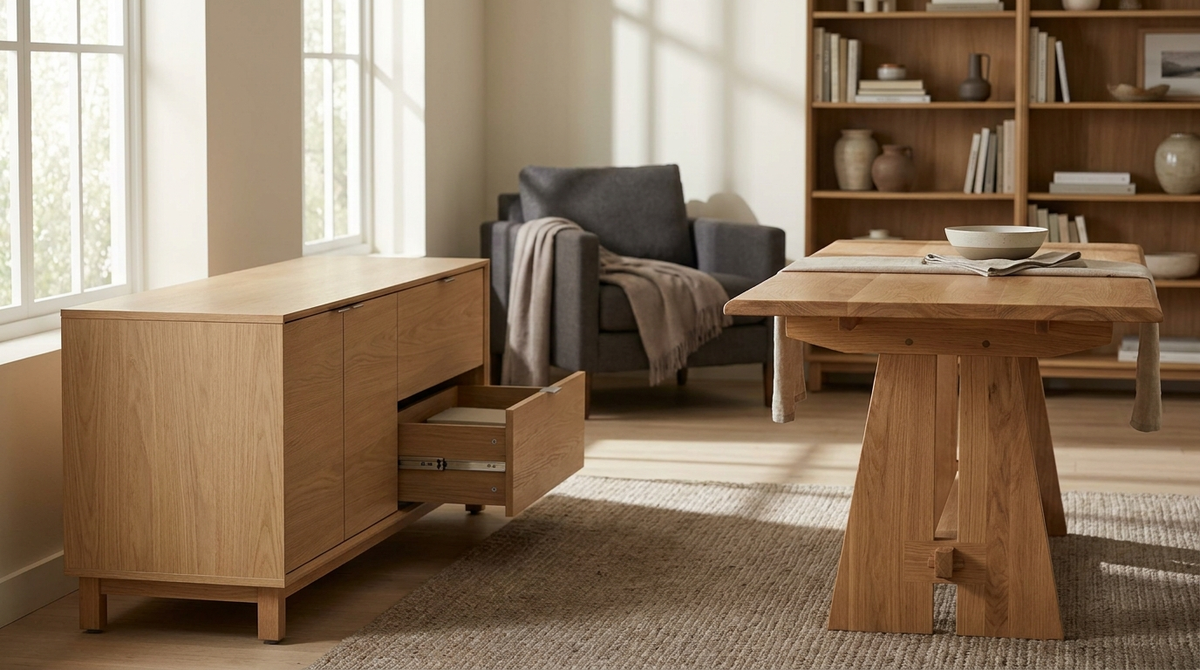
- Smoothly operating drawers and doors that remain aligned when opened and closed.
- Hardware that feels appropriately substantial and is firmly attached.
- An evenly applied finish suited to the expected use of the surface.
- Backs, edges, and undersides that do not appear unnecessarily thin or unfinished.
- Shelves that are properly supported and do not sag under a realistic load.
For upholstered seating, ask what supports the frame and cushions. Useful questions include whether the frame is kiln-dried hardwood or another specified material, how the seat is supported, what the cushion core contains, and whether cushions can be rotated or replaced. Strong joinery, well-supported seating, and serviceable components often matter more over time than a particular style name.
Do not use weight as a shortcut for judging quality. A heavy piece may still have poorly aligned drawers or weak connections, while a lighter design may be carefully engineered and stable.
Choose Materials by Room, Not by Reputation
The best furniture materials for families with kids and pets depend on the location, the type of wear, and the care you are prepared to provide. No material wins every comparison.
| Material | Strengths | Limitations & Suitable Uses |
|---|---|---|
| Solid wood | Characterful, often repairable, and suitable for tables, casegoods, and dining furniture. | Responds to humidity changes and needs protection from standing water, heat, and strong sunlight. |
| Wood veneer & plywood | Stable, well-finished broad surfaces and efficient cabinet construction. | Edges require careful finishing; quality depends on the substrate and assembly. |
| MDF & particleboard | Useful for panels, shelving, and case components when well designed. | Edges can be vulnerable to moisture; hardware attachment deserves close inspection. |
| Metal | Strong structure with a clean, practical finish. | May scratch, corrode, or feel cold depending on the design. |
| Glass & stone | Distinctive, easy-to-clean surfaces. | Can chip, scratch, show fingerprints, or create heavy pieces less suited to young children. |
Solid wood brings natural variation and can often be maintained or repaired, but it is not immune to household conditions. Wood naturally responds to moisture in the air, so a well-made piece should be constructed to accommodate seasonal movement.
Well-made veneer is not a shortcut to poor quality. A stable panel with a carefully applied veneer can be a sensible choice for a wide cabinet side or large tabletop, particularly when it is properly edged and finished.
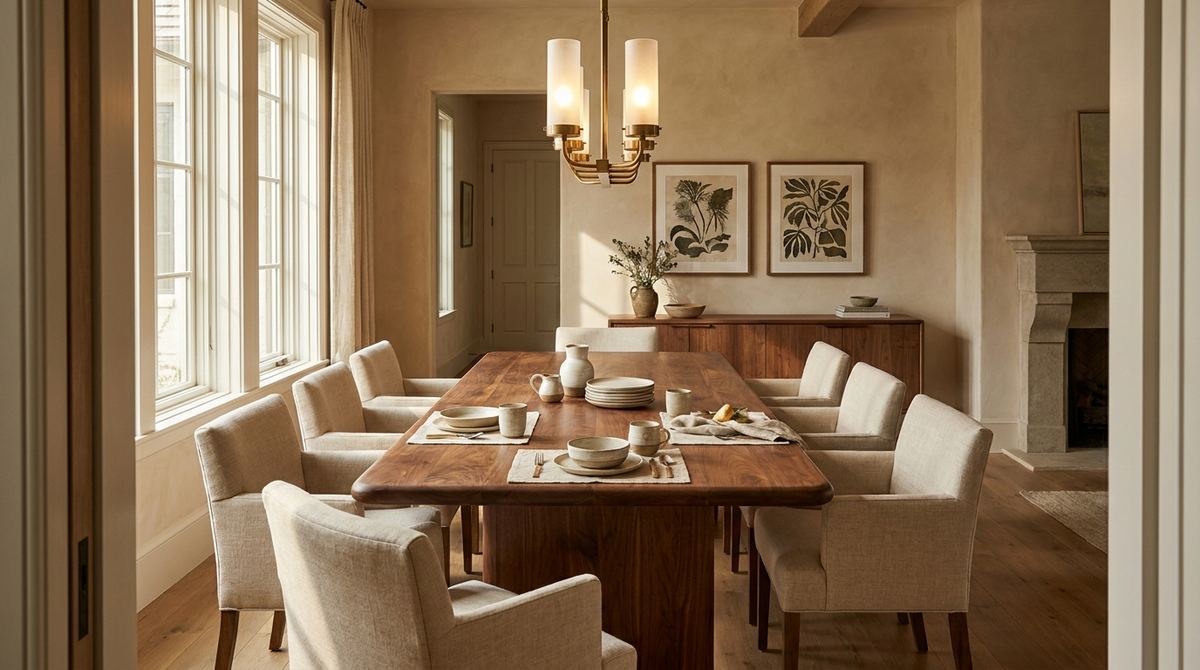
For a dining table, prioritize a stable structure, a finish that tolerates everyday spills and wiping, and an edge that can withstand regular contact. For a sideboard or cabinet, inspect the back, shelves, hinges, and drawer hardware as carefully as the visible front.
Select Upholstery for High-Traffic Homes
Knowing how to choose durable upholstery for high-traffic homes requires looking beyond a single abrasion number. Cleanability, weave, pilling, colourfastness, seam performance, and the fabric’s specific limitations all affect how it will live in your house.
Start with the care instructions. Ask what can be spot-cleaned, which products are approved, and whether removable covers can be washed. "Performance" does not mean stain-proof or pet-proof. Cleaning chemicals, sunlight, claws, repeated friction, and neglected spills can still affect a textile.
A tightly woven fabric may be a practical option in a home with pets because it offers fewer obvious openings for claws to catch. Request a substantial swatch and examine it in daylight. Rub it gently, look at the back, and consider how pet hair or crumbs will appear against the colour.
Practical upholstery options can include performance polyester blends, tightly woven natural-fibre blends, coated textiles, and leather with a finish suited to your household.
Colour and pattern are part of performance too. Mid-tones, subtle patterns, and textured weaves can make everyday marks less noticeable than a very pale solid. Very dark upholstery may conceal some stains but show light-coloured pet hair.
Do not assume that indoor-outdoor or commercial-grade fabric is automatically the best residential choice. These labels describe particular performance characteristics, not every quality needed for comfort, appearance, cleanability, and long-term use.
Match Cushions, Frames, and Finishes to Daily Wear
The outer fabric is only one part of an upholstered piece. Cushion construction and support determine how the sofa or chair feels on the first day and how it may retain its shape with repeated use.
Ask whether cushions can be rotated or reversed, whether the covers are removable, and what is inside the seat and back cushions. A very soft, sink-in seat may require more regular plumping and may show changes in shape more visibly.
For dining chairs, inspect the connection between the legs, seat, and back. Chairs are pulled, shifted, and leaned in ways that place stress on joints.
Storage furniture deserves the same scrutiny. Test drawers and doors, ask about adjustable shelving and weight limits, and consider whether hinges, handles, or cushions can be repaired or replaced in the future.
Design for Safety, Stability, and Easy Living
Durability is not useful if a piece is unstable or poorly placed. Anchor dressers, bookcases, media furniture, and televisions whenever recommended by the manufacturer.
Choose stable bases and broad footprints for child-accessible rooms, and consider softened or rounded edges where people regularly move through the space. Keep fragile or hot objects away from the edges of tables and cabinets.
Measure more than the room itself. Confirm that furniture can pass through doors, hallways, staircases, and tight corners, then leave enough circulation space for people and pets to move comfortably.
Make Durability Look Intentional
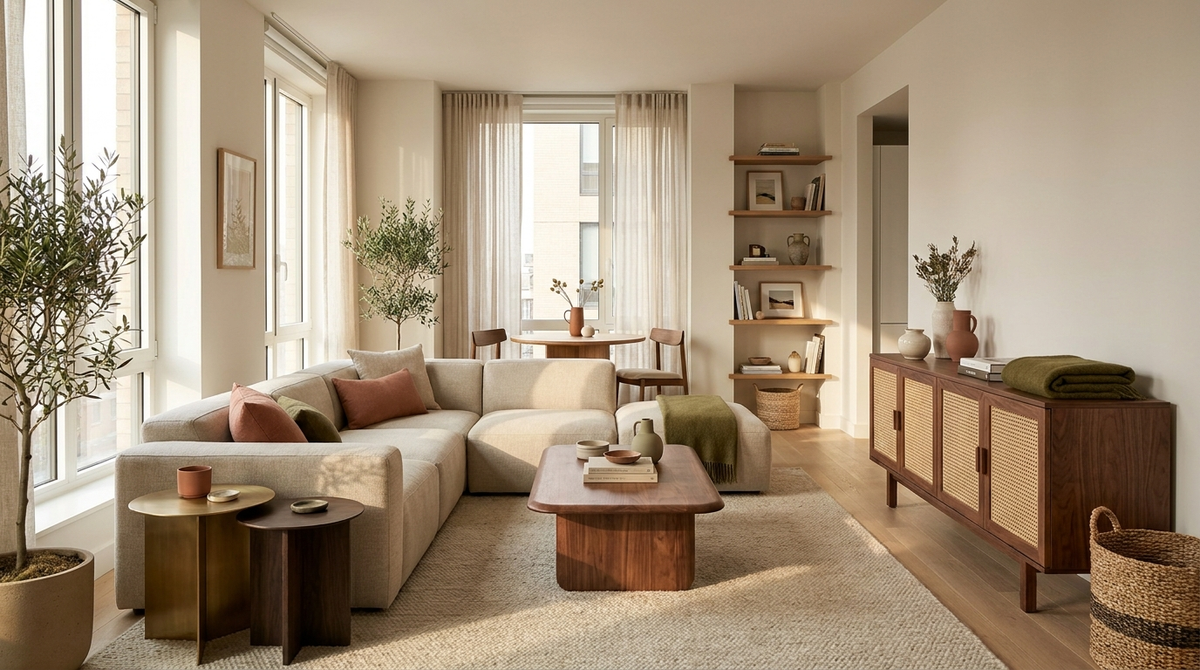
Practical furniture does not have to look utilitarian. A consistent palette of natural wood, stone, ceramics, and restrained metal can make hardworking pieces feel cohesive and considered.
Direct wear through styling. Use trays on coffee tables for drinks and remotes, baskets for toys and throws, and washable layers where muddy paws commonly enter the room.
Choose silhouettes with enough visual structure to remain polished when the room is active. A well-proportioned sideboard can conceal clutter, while an appropriately sized coffee table provides usable space without blocking walkways.
Protect the Investment With Simple Care Habits
Begin with the manufacturer's instructions rather than applying a universal household cleaner. Blot spills promptly, avoid aggressive scrubbing, and always test any approved treatment in an inconspicuous area first.
For upholstery, vacuum pet-hair-prone areas with an appropriate attachment and rotate cushions where possible. For wood furniture, use coasters, placemats, trivets, and protective felt pads. Keep wood away from prolonged direct sunlight, heating vents, and damp environments.
A short seasonal check can prevent small problems becoming expensive ones:
- Tighten loose hardware and check for wobbling.
- Inspect drawer slides, hinges, and cabinet doors for alignment.
- Look for lifted edges, chips, or moisture damage.
- Rotate cushions and check seams for early signs of wear.
- Reassess furniture anchors after moving pieces.
- Confirm cleaning products still match the manufacturer's recommendations.
A Five-Minute Buying Checklist
- What is the piece’s actual daily use, and what is the highest-risk stress it will face?
- What materials are used in the frame, surfaces, support system, hardware, and upholstery?
- What care instructions and performance information are available?
- Can the piece be cleaned, adjusted, repaired, or reupholstered if necessary?
- Does it fit the room, entry route, and intended traffic flow?
- If it is storage furniture, is it stable and suitable for anchoring?
- Are the materials and finish appropriate for your household’s sunlight, humidity, children, pets, and cleaning habits?
The strongest long-term choice is not necessarily the hardest, heaviest, most expensive, or most solid-wood piece. It is the one whose construction, surface, upholstery, scale, safety features, and care requirements make sense for the life around it.
Explore Mercer & Gray’s collection of thoughtfully made furniture for everyday living, pieces selected to bring lasting function and considered design to the home.