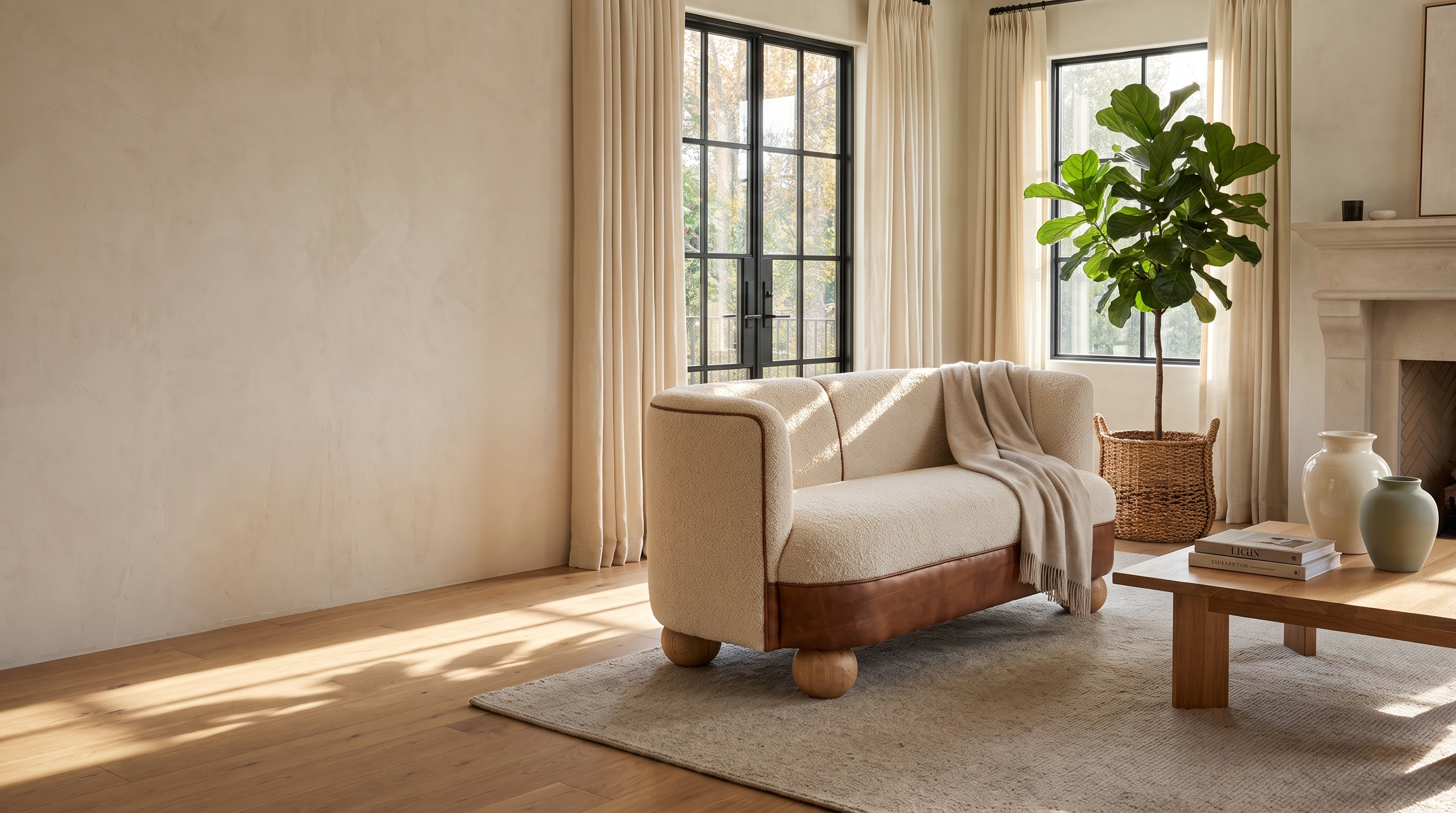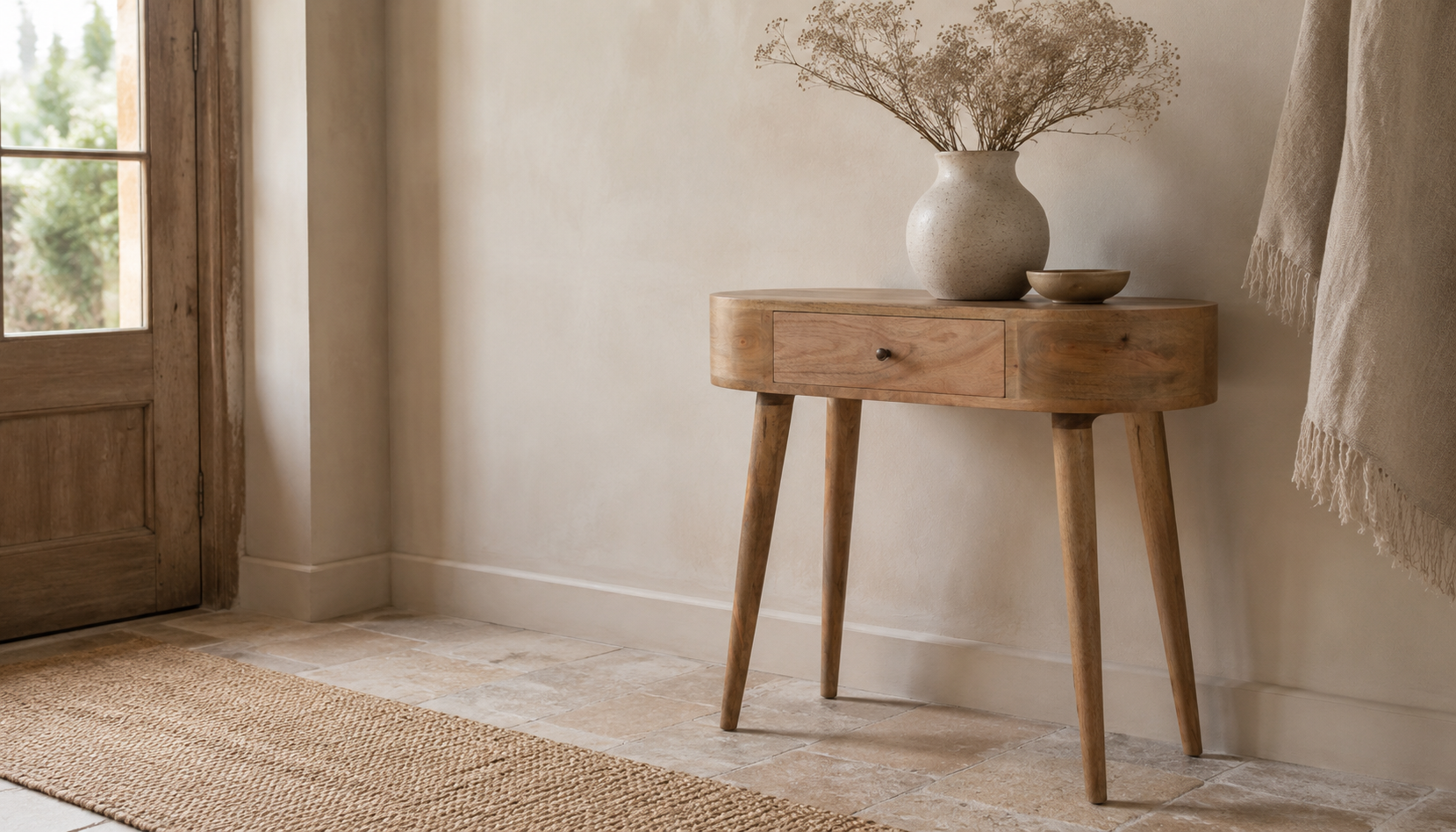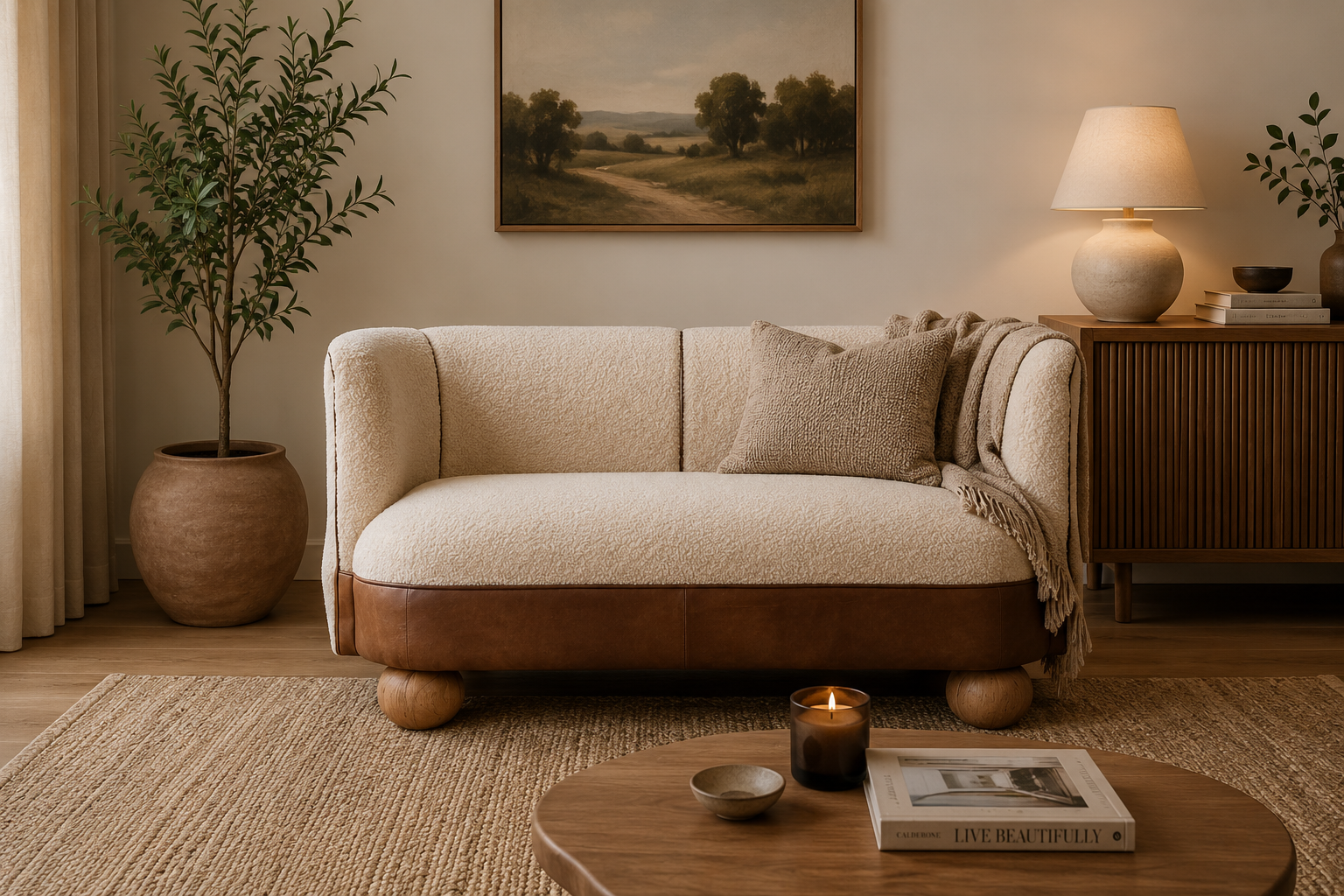
The Secret Behind Solid Wood Furniture That Lasts Decades
Most people assume the words "solid wood" on a product listing are enough. They are not. The phrase has become marketing shorthand, attached to furniture that might last a decade or might last five. If you want solid wood furniture built to last decades, the real difference between a piece you'll pass down and one you'll replace before your kids leave home comes down to the wood species, the construction method, and the joinery. This guide explains exactly what to look for so you can buy once and stop replacing.
At Mercer & Gray, we've built our entire brand around those principles, because we've seen firsthand how many "solid wood" pieces fail long before they should. Here's what separates furniture that endures from furniture that doesn't.
Why the "solid wood" label doesn't guarantee durability
The label is legal, but it doesn't tell the full story. "Solid wood" technically excludes veneers layered over MDF or particleboard, according to FTC guidance on wood product labeling, but it says nothing about wood density, moisture content, or how the piece was assembled. A pine dining table qualifies as solid wood. So does a white oak table built with hand-cut joinery. The difference in lifespan between those two is substantial: softer species like pine typically last a fraction as long as dense hardwoods like white oak, which can hold structural integrity for 40 to 60 years with proper care.
Terms like "solid wood," "engineered wood," and "real wood veneer" are often used interchangeably in product listings, and none of them fully describe construction quality. A piece can be solid wood and still use cam-lock fittings, poor-grade timber, or improperly dried lumber. All of those shortcuts accelerate failure, regardless of what the label says.
Wood that hasn't been kiln-dried to the correct moisture content will warp, crack, or split as humidity shifts seasonally, no matter how hard the species is. Properly seasoned wood is the foundation of durability, and it's a construction principle that's often missing from product listings entirely. That silence is telling.
Wood species for solid wood furniture built to last decades
Not all trees make furniture-grade material that survives decades of daily use. The Janka hardness scale is the most reliable starting point for understanding which ones do. The test measures how much force it takes to embed a steel ball halfway into a wood sample. Higher numbers mean greater resistance to denting and wear, which matters most for high-contact pieces like dining tables, bed frames, and entryway consoles. For further reading on the relative hardness of species, see an overview of the world's strongest and hardest woods.
Here's how the most common durable hardwoods compare:
- Hickory, Janka rating of 1,820, 2,000 lbf; can last 50, 60 years with proper care
- Hard maple, 1,450 lbf; similarly durable, often used in flooring and furniture built for heavy use
- White oak, 1,360 lbf; one of the most popular choices for heirloom furniture, consistently delivering 40, 60 years of structural integrity
- Black walnut and cherry, 950, 1,010 lbf; softer, better suited for low-impact pieces like bedroom furniture or display cabinets where visual appeal outweighs wear resistance
Mango wood, the primary material in every Mercer & Gray piece, carries a Janka rating of approximately 1,070 lbf, comfortably between softer woods like pine and harder woods like oak, placing it solidly in the durable hardwood category for indoor furniture. What distinguishes mango beyond hardness is its sustainability story: according to some suppliers and sustainability advocates, mango trees are harvested after their fruit-producing years have ended, making them among the more responsibly sourced timbers available. Mango performs well when properly finished and maintained, though it is more moisture-sensitive than oak or maple and benefits from attentive care in humid or variable climates. With that consistent care, mango wood furniture can deliver decades of reliable service, for more detailed species data, see this Mango wood profile.
The joinery methods that separate heirloom pieces from disposables
Most buyers never see the inside of a joint. They should know what questions to ask before they buy. Joinery is the most important factor in whether a piece lasts a decade or outlives everyone in your household, and it's the element manufacturers rarely advertise because time-consuming joinery increases manufacturing cost, and that cost cuts into margins on mass-market goods. For a deeper look at joinery and why it matters, see Solid Wood Durability Explained.
Mortise-and-tenon joinery is the gold standard. A projecting piece of wood called the tenon fits into a cavity called the mortise, creating a mechanical bond that only gets tighter as the wood ages. When glued, it becomes nearly inseparable. This is what holds a frame together through decades of seasonal expansion and contraction, and it's the joinery method that defines Amish furniture traditions, where pieces built a century ago are still structurally sound in homes today. For practical examples and methods, review modern joinery techniques in furniture making.
Dovetail joints are the other reliable signal of serious craftsmanship. The interlocking pin-and-tail design resists pulling apart without any hardware and is nearly impossible to fake convincingly in cheap manufacturing. You'll find it most often in drawer construction. A true hand-cut dovetail tells you the maker prioritized structural integrity over production speed, exactly the kind of signal worth paying attention to.
Dowels are adequate but not exceptional. They provide a reasonable bond but lack the mechanical locking strength of mortise-and-tenon. Cam-lock fittings, the plastic connectors used in flatpack furniture, are the clearest signal that a piece was designed for replacement rather than longevity. If you've ever had a drawer front fall off a two-year-old piece, you've met a cam-lock. If you're curious about traditional Amish approaches to construction, read more about what techniques do Amish use for woodworking.
How to spot cheap construction before you buy
The shortcuts are visible if you know where to look. In product descriptions, phrases like "engineered wood core," "veneer finish," "easy assembly," and "melamine surface" are all red flags. None of those terms describe solid wood construction. They describe cores made from compressed wood fibers or chips, covered with a thin surface layer that mimics the appearance of grain.
In product photos, look at the edges. A smooth, uniform edge without visible grain variation usually means MDF or particleboard underneath. Genuine solid wood shows consistent grain running through the piece, including at cut edges and corners. A thin, uniform layer at the corner with no depth to the grain pattern is a veneer over a synthetic core.
Warranty length is one of the most honest signals a manufacturer sends. A lifetime structural warranty means the brand is confident the piece will outlast the buyer. A one-year warranty signals the opposite. Run the math: a $2,500 piece lasting 25 years costs $100 per year. A $500 piece replaced every six years costs more over time and generates significantly more waste. Once you calculate cost per year rather than sticker price, the gap between quality and budget furniture narrows considerably.
What solid wood furniture built to last decades actually costs, and why the math works in your favor
Handcrafted solid hardwood furniture typically runs from $800 into the thousands for dining tables and bedroom pieces, depending on species, joinery complexity, and maker. Custom work runs higher. Mass-produced alternatives often sit at the lower end of that range but carry a five-to-seven-year replacement cycle. When you account for the full ownership period, the cost-per-year difference between quality and budget furniture is smaller than the sticker prices suggest, and that's before factoring in the environmental cost of sending a particleboard dresser to landfill every six years.
Every piece in the Mercer & Gray collection is handcrafted by skilled artisans using time-honored joinery on 100% solid mango wood. Full bespoke customization is available across finishes, fabrics, inlays, and carvings, so the piece fits your space rather than a catalog. The brand's Tree-a-Day Project plants a tree with every order placed, aligning with the sustainable sourcing philosophy behind using mango wood in the first place. Complimentary shipping is included across the United States. For a buyer who understands heirloom-quality joinery and wood species, Mercer & Gray makes those principles tangible rather than theoretical. If you're weighing whether investing in solid wood is worth it, see our analysis on Solid Wood for Furniture: Is It Worth It?.
Maintenance tips for solid wood furniture built to last decades
Solid wood expands and contracts with seasonal humidity changes. Keeping indoor humidity between 40 and 55 percent, the range most commonly cited by woodworking and conservation specialists, prevents most cracking and warping before it starts. Oil or wax finishes benefit from an application every six to twelve months to maintain moisture resistance, with more frequent care recommended in dry climates or low-humidity interiors. Dining surfaces should always have coasters and placemats in regular use. Direct sunlight accelerates finish breakdown and causes fading, so placement away from south-facing windows extends a piece's surface life considerably.
One of the core advantages of genuine solid wood furniture is repairability. Scratches, dents, and worn finishes can be sanded and refinished because there is real wood depth beneath the surface. The standard refinishing process involves cleaning, sanding back to bare wood, repairing any damage with filler, restaining or resealing, and finishing with a clear topcoat, a step-by-step how to refinish wood furniture guide can be helpful when you tackle this for the first time. Refinishing is a legitimate part of a solid wood piece's long lifespan, not a sign of failure. It's how a dining table outlasts four decades of daily meals and still looks earned rather than worn out.
The secret was never hidden
What separates furniture that lasts from furniture that gets replaced isn't complicated. It's a series of choices: the right species, the right joinery, honest construction, and consistent care. Most furniture is built to be replaced because replacement is profitable. Solid wood furniture built to last decades, on mortise-and-tenon frames, from durable hardwoods like mango wood, white oak, and hard maple, operates on a different premise entirely. It's built to stay.
Before you buy anything described as "solid wood," look at the edge grain in the photos. Read the warranty. Ask what joinery holds the frame together. Those three questions will tell you more than any product description. If you want to stop buying furniture every few years, start with what the piece is actually made of. Mercer & Gray's collections are built on exactly those principles, if you want practical tips on choosing genuine pieces, begin with How to Find Solid Wood Furniture. Start there.