Sizing Guides by Room: How to Choose the Right Size, Not Just the Right Style
Picking a shape and finish is the fun part. Getting the size right is what actually determines whether a room works. A beautiful dining table that leaves no room to push your chair back, or a coffee table that sits awkwardly out of reach of the sofa, undoes a lot of good design decisions in one go.
Here's a practical, room-by-room starting point — the numbers that tend to make a space feel comfortable rather than cramped or oversized.
Dining tables
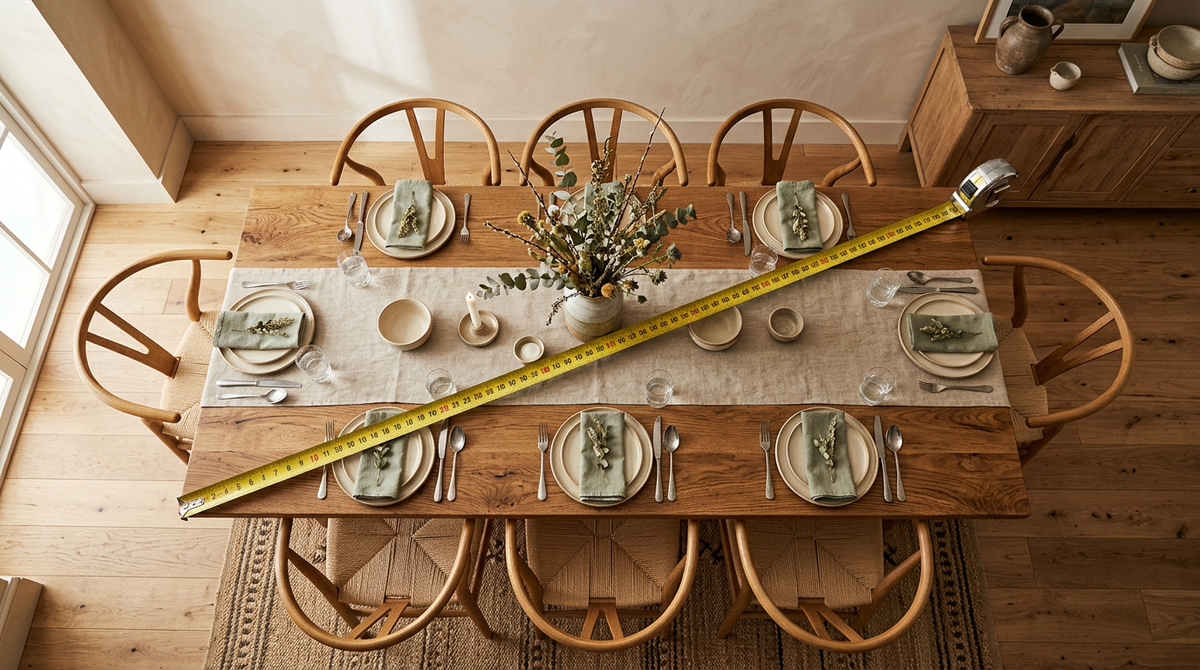
How many people, how much table. As a rule of thumb, allow about 24 inches of table width per seated person, plus roughly 12 inches of table depth per person on each side.
-
For 4 people: a table around 36–48 inches works well, round or rectangular.
-
For 6 people: look at rectangular tables roughly 66–78 inches long by 36–40 inches wide, or round tables in the 54–60 inch diameter range.
-
For 8 people: rectangular tables from about 80–96 inches long, or round/oval tables around 70+ inches.
Clearance around the table matters more than the table itself. Leave at least 36 inches between the table's edge and the nearest wall or piece of furniture — enough to pull a chair out and walk behind someone seated. If the space doubles as a walkway, aim for 42–48 inches where you can.
Living room: sofas, coffee tables and rugs
Coffee table sizing. A coffee table generally works best at around two-thirds the length of your sofa, and sitting 1–2 inches lower than the sofa's seat height, so it's easy to reach without dominating the space visually. Leave 14–18 inches of clearance between the coffee table and the sofa — enough to comfortably stretch your legs or walk past.
Rug-to-sofa proportions. There are three common approaches, and any of them works depending on room size:
-
All legs on the rug — the most grounded, cohesive look, best suited to larger living rooms.
-
Just the front legs on the rug — a good middle ground for mid-sized rooms, keeping furniture visually anchored without needing an oversized rug.
-
Rug floating in front of seating, none of the furniture on it — works in smaller rooms, though it can read as slightly disconnected if the rug is too small relative to the seating.
As a general guide, aim for at least 6–10 inches of bare floor visible between the rug's edge and the surrounding walls, so the rug doesn't look like it's been cut to fit the room by accident.
Side and end tables. These generally sit best at, or within an inch or two of, the height of the sofa arm — tall enough to be useful for a drink or a lamp without disappearing below arm height.
Bedroom
Nightstand height. Aim for the nightstand surface to sit roughly level with the top of your mattress, give or take an inch or two — close enough that reaching for a glass of water or switching off a lamp doesn't mean leaning down or reaching up awkwardly.
Clearance around the bed. Where space allows, leave at least 24–30 inches on each side of the bed for walking room, and closer to 36 inches on the side used most often for getting in and out.
Entryway
Console table height and depth. A console table generally works best at 34–36 inches high — roughly counter height — with a depth of 14–18 inches, enough to hold keys, mail or a lamp without eating into a narrow hallway's walking space.
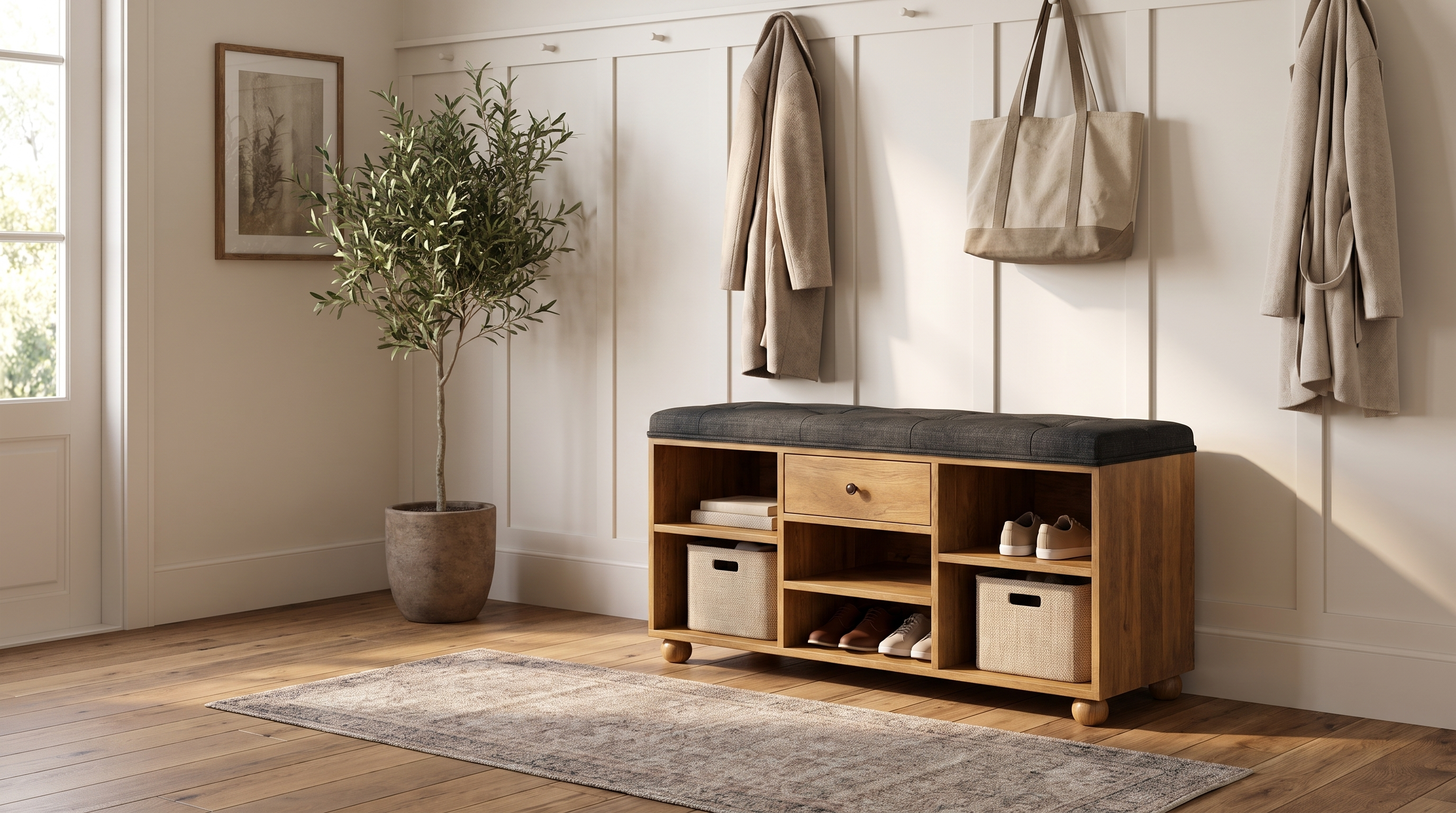
Bench sizing. In an entryway, a bench between 36–48 inches long comfortably seats one or two people putting on shoes, and works well against a wall shorter than a full-length hallway run.
Office
Desk clearance. Leave at least 36 inches behind a desk chair for it to push back and for you to walk past comfortably — more if the chair will need to swivel or roll to reach a filing cabinet or shelf.
A last practical note
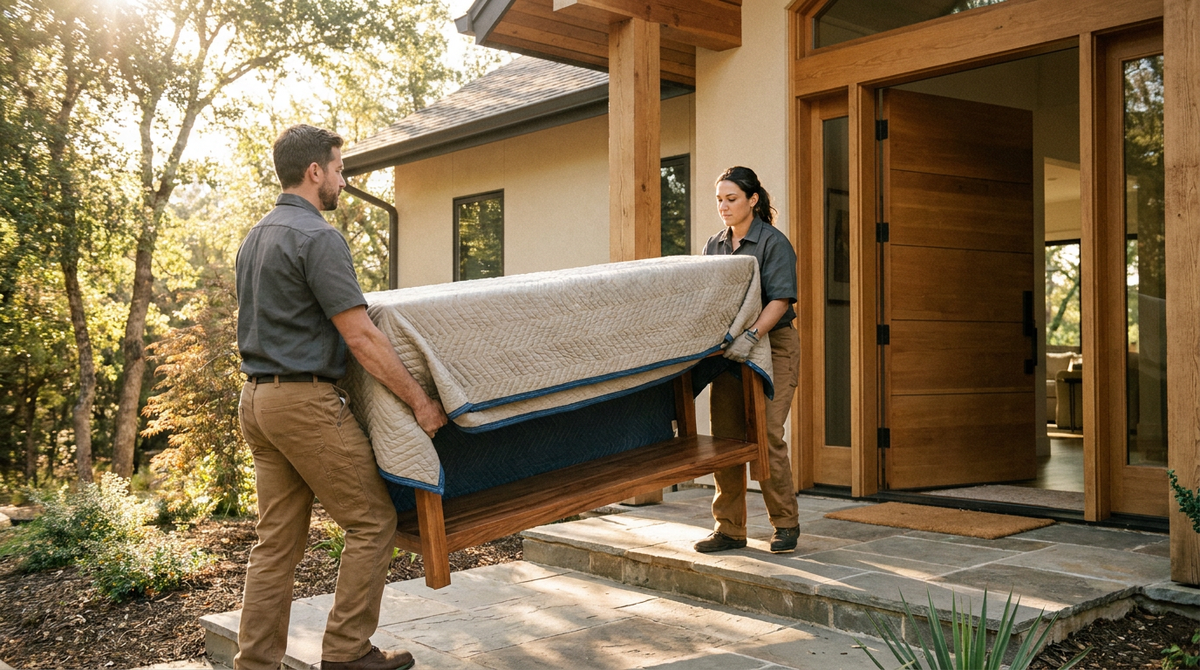
Room and furniture guides give you a strong starting point, but the only way to know a piece will genuinely work is to mark it out. Use painter's tape or newspaper on the floor to outline the footprint of a table, sofa or bed before you order — it takes ten minutes and tells you more than any guide can about how a piece will actually feel in your space. And once you've settled on a size, our guide to measuring for delivery is worth a read too — the right size on paper still has to make it through your front door.