Mango Wood Furniture Built to Last Generations
Most furniture sold today is designed to be replaced. That's not a cynical reading of the market; it's simply how the math works when manufacturers build to a price point rather than a lifespan. Somewhere along the way, buying a dining table started to feel less like acquiring something and more like leasing it for a few years until it chips, swells, or just looks tired. Mango wood furniture built to last generations offers a genuinely different approach, one rooted in material integrity rather than marketing.
Heirloom-grade furniture isn't only a question of price. It starts with material. The wood a piece is built from determines almost everything: its resistance to daily use, its ability to be refinished decades later, and whether it develops character over time or simply deteriorates. That's the conviction behind every piece at Mercer & Gray, and it's the lens through which this article examines mango wood, not as a marketing category, but as a structural reality.
Why most furniture doesn't make it to the next decade
Flatpack furniture is engineered to a cost, not a lifespan. Particleboard cores, MDF panels, and veneer surfaces are inexpensive to manufacture and assemble, but they're also highly vulnerable to the conditions of daily life. Moisture causes swelling. Surface chips expose the substrate beneath. Joints held by cam locks and a handful of screws start to loosen within a few years of normal use. A dining table that wobbles by year five isn't a furniture problem; it's a material problem that was decided long before the piece left the factory.
Heirloom furniture, in practical terms, means something specific. It means the construction integrity holds up under decades of use, the material is dense enough to resist surface damage, and the piece can be repaired and refinished rather than discarded. It also means the wood itself develops a patina over time, deepening in character rather than degrading. Not every hardwood qualifies for that standard. Heirloom potential is built in at the material stage, before a craftsman ever touches the wood.
Why mango wood furniture built to last generations stands apart
Mango wood registers 1,070 lbf on the Janka hardness scale. For context: walnut sits at approximately 1,010 lbf, teak at around 1,000 lbf, and oak at 1,290 lbf. In real-world terms, that places mango wood firmly in the category of furniture-grade hardwoods capable of absorbing the daily impact of a dining table, entryway bench, or bedroom dresser without significant surface wear. It's harder than it has any right to be given how often it gets dismissed as a secondary hardwood. (For detailed material data, see mango wood on the Wood Database.)
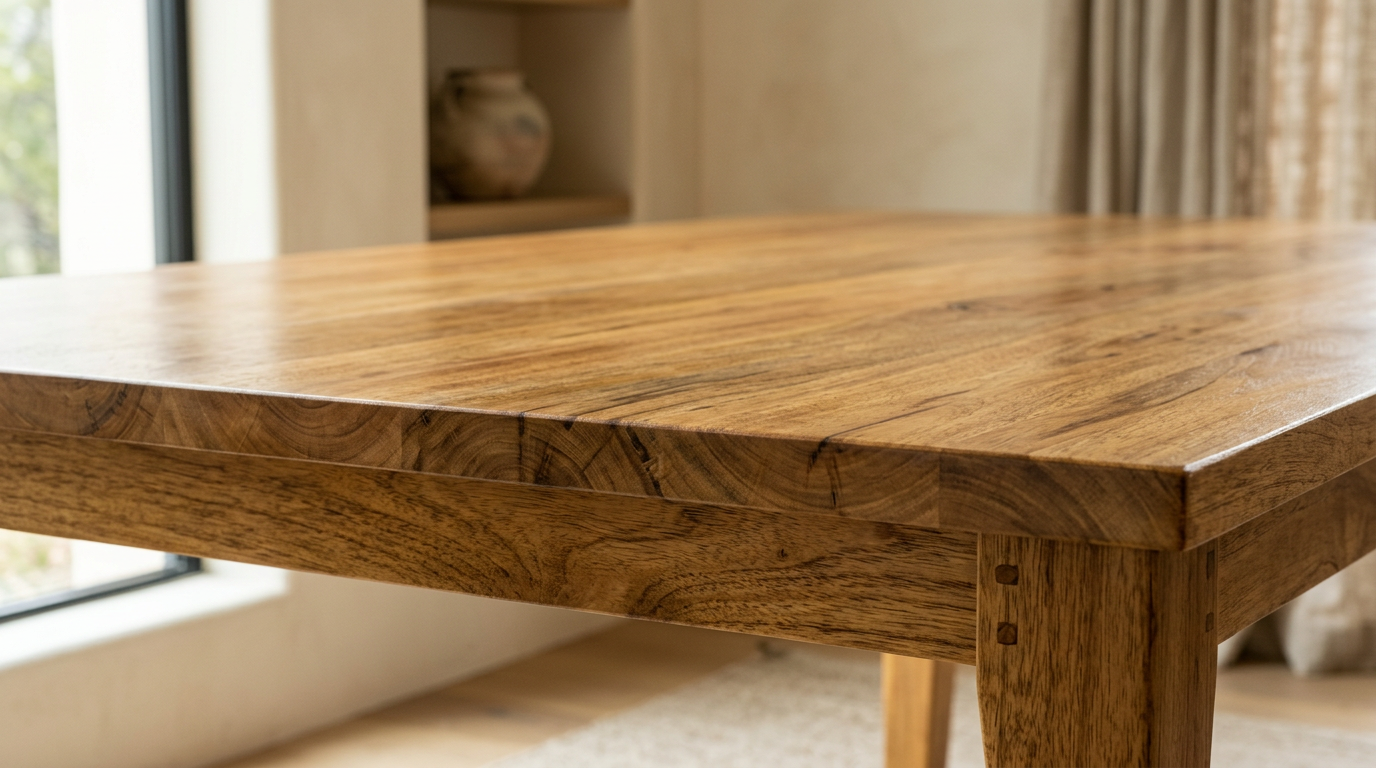
The grain structure matters just as much as hardness. Mango wood's relatively tight grain means fewer open pathways for moisture to infiltrate the surface. That reduces warping risk over time, which is one of the primary ways furniture fails in real homes where humidity fluctuates between seasons. Density and grain tightness together are what make heirloom mango wood furniture a structural claim, not just a brand promise.
How mango compares to other popular hardwoods
Oak is harder than mango by roughly 20 percent, which matters for flooring but makes very little practical difference for a dining table or cabinet. Oak also costs significantly more and carries heavier sourcing concerns tied to old-growth forests. Teak is slightly softer than mango but more water-resistant outdoors; for indoor furniture, mango performs comparably at a fraction of the price. Walnut and mango are nearly identical in hardness, both hovering around 1,010 to 1,070 lbf, but walnut commands a steep price premium and is far less sustainably sourced at scale. Mango wood isn't a compromise. Once you look at the numbers side by side, it's one of the most considered choices available in this category.
A wood with a sourcing story worth understanding
Most people never ask where the tree came from. With mango wood, the answer changes the entire framing. Mango trees are harvested at the end of their fruit-bearing life, typically after 15 to 20 years of productive agricultural use, when orchard farmers would otherwise clear and burn them to plant new saplings. The wood is a byproduct of fruit farming, not a product of deforestation. The tree already lived a full, useful life before it became furniture.
This is what separates mango wood fundamentally from hardwoods sourced from old-growth forests or purpose-grown timber plantations. No forest is cleared to produce it. The land was already in agricultural use. That circular logic, turning an end-of-life agricultural resource into furniture that might last a century, is genuinely difficult to argue against from an environmental standpoint. For a comparative look at solid mango versus other hardwoods, consider this buyer's guide to solid mango wood vs. other hardwoods.
FSC certification and what ethical sourcing actually looks like
Not all mango wood is harvested this way. Premature cutting, removing trees before their fruit-bearing cycle ends, is an ethical problem within the industry and one that compromises both sustainability and grain quality. FSC certification and Fair Trade labels are the practical tools buyers have for verifying responsible sourcing. A brand willing to be transparent about where its timber comes from and how it was harvested is worth paying attention to. Mercer & Gray's Tree-a-Day Project, which contributes a reforestation planting with every order, reflects this kind of accountability. It's one thing to source responsibly; it's another to actively give something back. For a balanced look at the benefits and drawbacks across the category, see the discussion on the pros and cons of mango furniture.
What this looks like in a real home: Mercer & Gray's approach
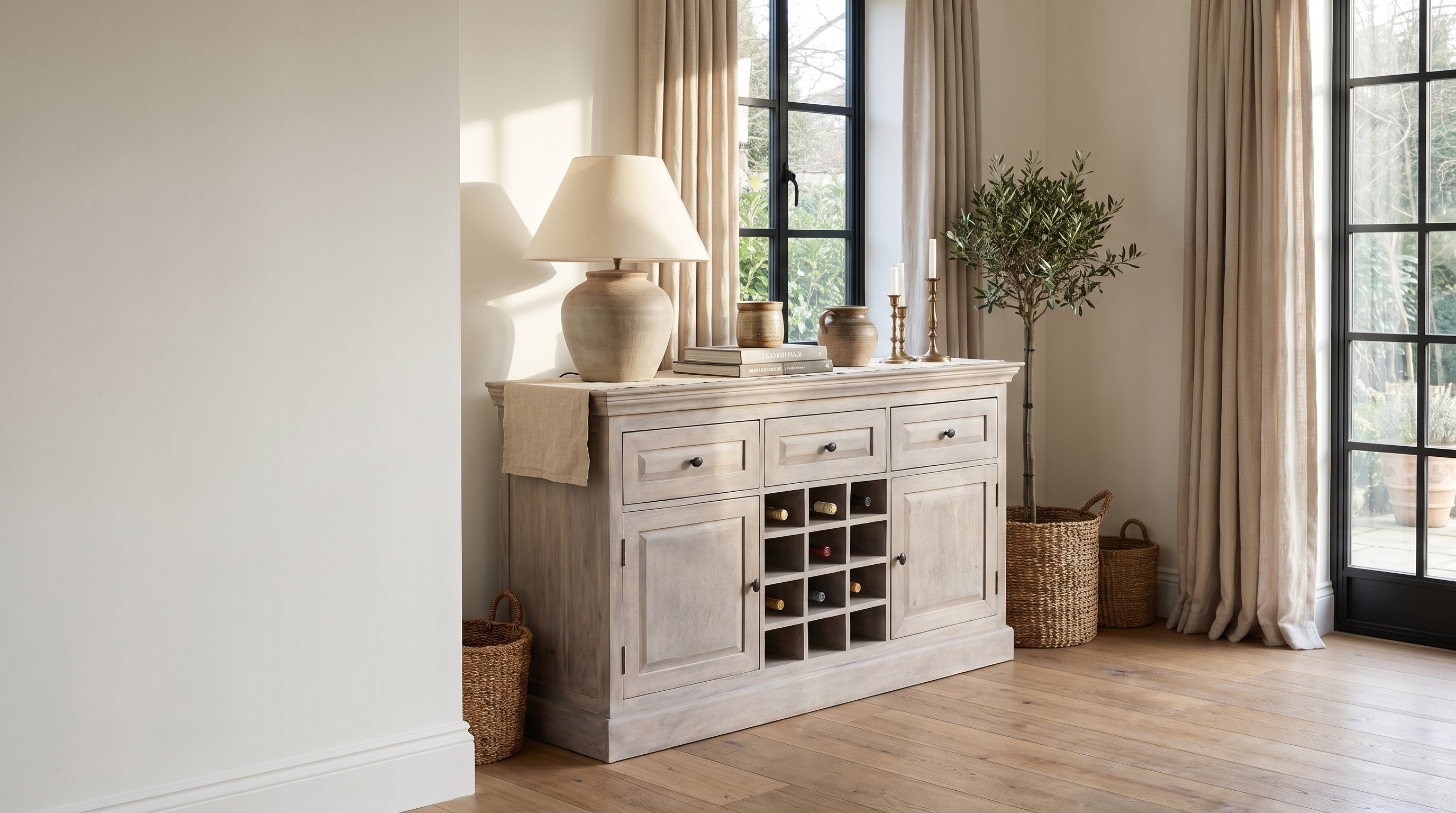
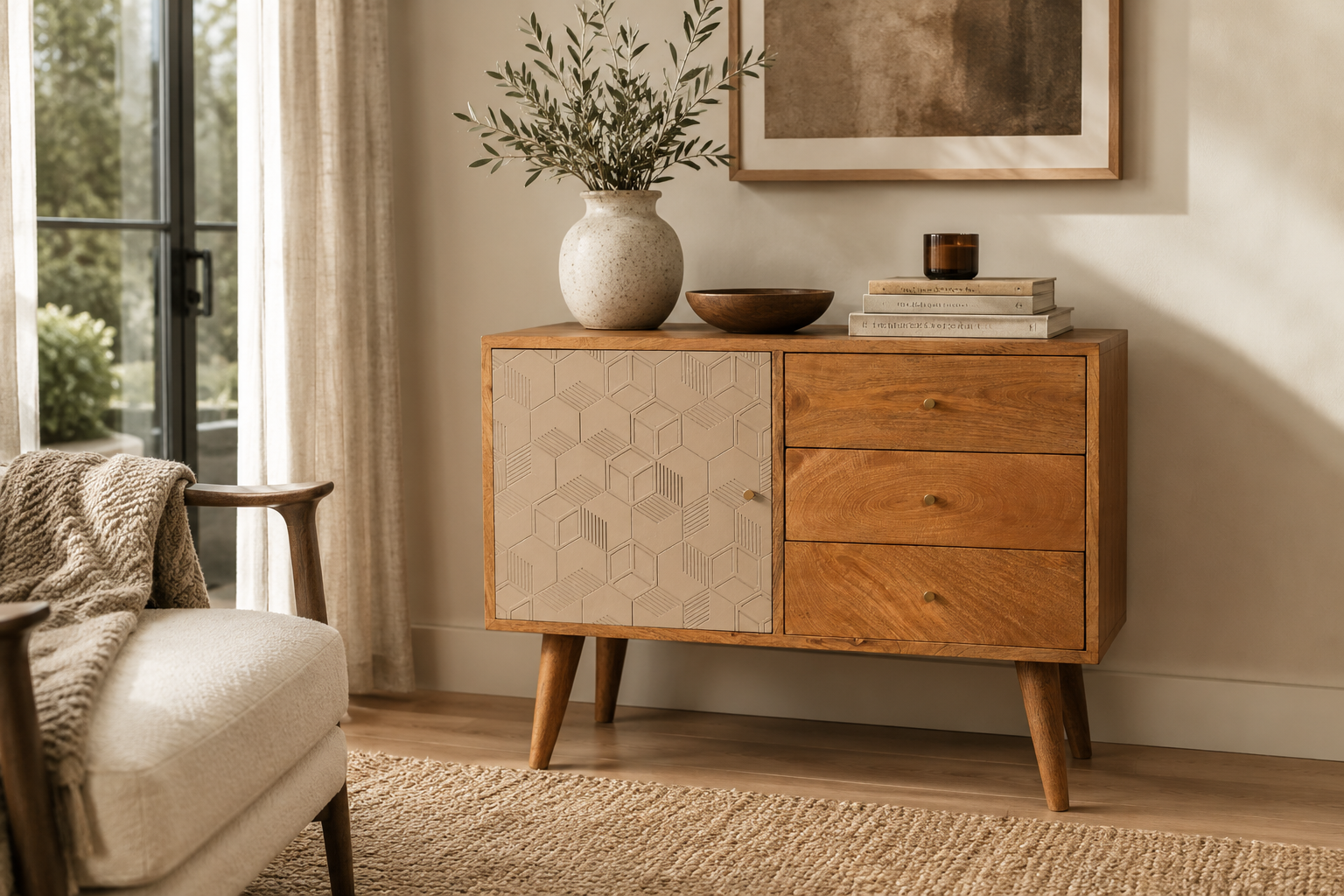
Mercer & Gray's collections, including Cove, Haven, Vale, Orchard, and others, are built from 100% solid mango wood and other responsibly sourced timbers, constructed by skilled artisans using traditional joinery techniques. No two pieces are identical, because no two sections of mango wood grain are identical. That variation is not a quality control issue; it is exactly what gives each piece its long-term visual appeal. Furniture made on an assembly line looks like assembly line furniture. These pieces look like they were made by someone who cared how they turned out. For more on our materials philosophy, read Solid Wood for Furniture: Is It Worth It?
The construction standard reflects a clear philosophy: solid joinery at stress points, not just glue and staples; consistent finish application that seals the wood without masking its grain character; hardware chosen to match the furniture's intended lifespan. The bespoke customization options available through Mercer & Gray, including finishes, inlays, and carvings, are only possible because the underlying construction is confident enough to carry them. You don't carve detail into furniture you expect to replace in five years.
The care routine that keeps mango wood furniture going for 50+ years
Weekly dusting with a dry microfiber cloth is the single most important maintenance habit, it prevents particulate buildup from working into the grain surface over time. Every three to four months, conditioning the wood with mineral oil, linseed oil, or tung oil keeps the surface healthy. Apply in circular motions following the grain, let it absorb for 20 to 30 minutes, then buff lightly with a clean cloth. Follow with a thin coat of beeswax to seal the surface. This routine prevents the wood from drying out, which is the primary cause of surface cracking in mango furniture that hasn't been maintained. For step-by-step care guidance specific to mango, review this how to care for mango wood furniture guide.
What to avoid is equally important. Direct sunlight is mango wood's primary indoor enemy; prolonged UV exposure accelerates fading and can cause warping over time. Keeping indoor humidity between 40 and 55 percent, and positioning pieces away from radiators, vents, or air conditioning units where temperature and moisture fluctuate sharply, makes a measurable difference over decades. Ammonia-based cleaners, abrasive sponges, and bleach solutions should never be used on mango wood. These strip the protective finish and leave the surface exposed to the kind of moisture damage that compounds quietly over years before it becomes visible.
How to choose mango wood furniture built to last generations
Solid mango wood feels noticeably heavy. Veneer and MDF alternatives feel lighter and, when tapped, produce a dull thud rather than a resonant tone. Run your hand across the surface: real grain has subtle ridges and texture; veneer feels smooth and uniform across the board. Check the edges for end grain, the cross-section visible at a cut edge. This only appears in solid construction. If the grain pattern repeats symmetrically across panels, it's almost certainly a veneer applied over an engineered core. These checks take 30 seconds and can save a buyer from a decade of regret, see our quick checklist in How to Find Solid Wood Furniture | Mercer and Gray.
Three questions are worth asking before any purchase. First: is this 100% solid wood, or does it use engineered core materials? The label "solid wood products" is often a euphemism for MDF, ask directly. Second: where was the timber sourced, and can the brand verify responsible harvesting? A brand that can't answer this question hasn't thought carefully about what they're building with. Third: what is the finishing process, and can this piece be refinished in the future? Furniture that can be sanded, re-oiled, and refinished is furniture that can last 100 years. Furniture that cannot be repaired will eventually become landfill.
What you're really deciding when you buy furniture
Buying furniture is, at its core, a choice about what you want to keep. Mango furniture built to outlast a single generation isn't a romantic idea layered onto a marketing campaign. It's a structural reality, the wood's density, tight grain, and orchard-reclaimed origins make it one of the most considered choices available in solid wood furniture today.
When you're ready to buy, the question worth sitting with is simple: are you buying something to use for a few years, or something to pass on? That answer shapes what you look for, and what a piece of furniture actually needs to be built from.
If you're ready to explore what mango wood furniture built to last generations looks like in practice, Mercer & Gray's collections are available to browse by room or by collection, with free shipping across the United States. Each piece is made to be lived with, not replaced. Learn more about purchasing options and where to find our solid pieces at Where Can I Get Solid Wood Furniture? | Mercer and Gray.