The Ultimate Guide to Bedroom Furniture Collections
Most people spend weeks choosing a mattress. They research coil counts, test firmness levels in the store, and read comparison articles at midnight. Then they assemble the rest of their bedroom furniture piece by piece, a dresser here, a nightstand there, hoping it all comes together. It rarely does. The room ends up looking assembled rather than designed, and there's a low-grade dissatisfaction that's hard to name but easy to feel every morning.
Bedroom furniture collections solve this quietly. When every piece in a room shares the same wood, the same finish philosophy, and the same design proportions, the room stops competing with itself and starts working. At Mercer & Gray, each collection is designed as a cohesive whole rather than a catalog of parts, that principle shapes everything from the hardware scale to the finish family. By the end of this guide, you'll know which collection fits your room dimensions, your budget, and your aesthetic, and you'll have a clear framework for buying with confidence.
What bedroom furniture collections actually include
The core pieces and why each one earns its place
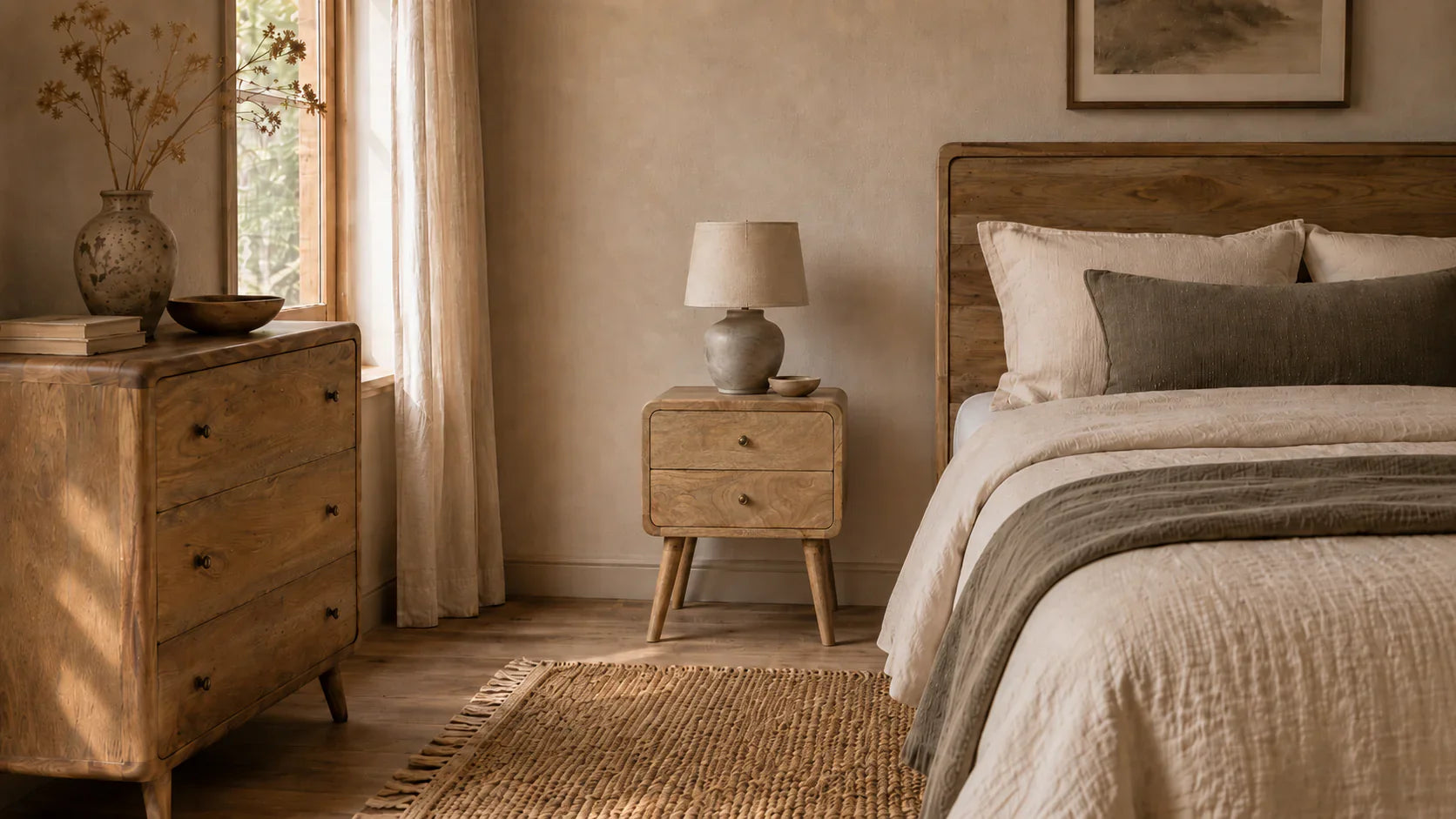
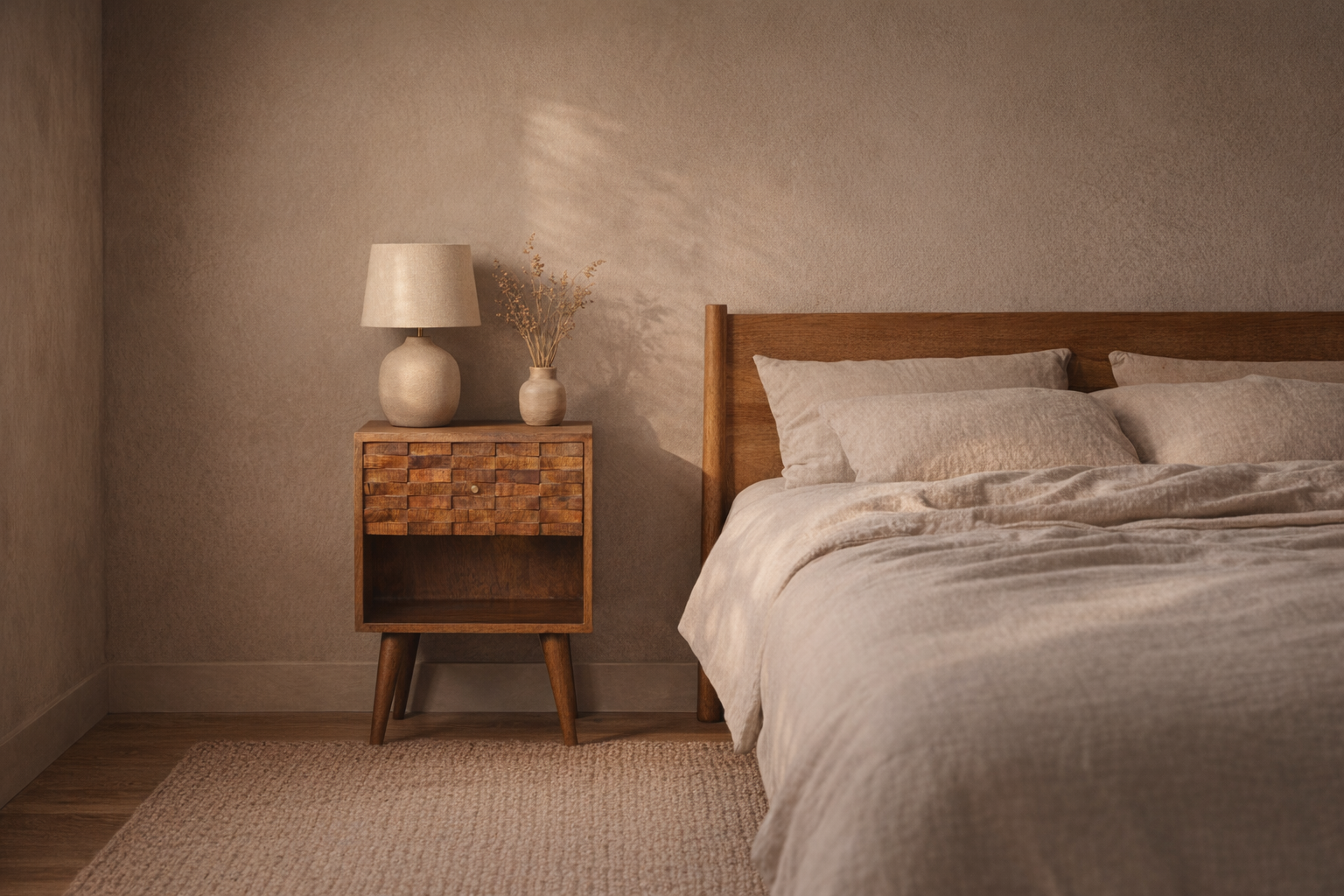
Most bedroom furniture collections are built around three to four pieces: a bed frame (headboard, footboard, and rails), one or two nightstands, and a dresser. Mattresses are almost always sold separately, so don't factor one into the set price. Each piece has a specific role. The nightstand provides bedside function and creates visual balance on either side of the bed. The dresser serves as the room's primary storage anchor, and its horizontal profile grounds the opposite wall.
A four-piece set typically means a bed, two nightstands, and a dresser. This configuration works best in master bedrooms where symmetry matters and storage needs are shared between two people. A three-piece set, bed, one nightstand, and a dresser, suits smaller rooms or single sleepers who want a cleaner footprint without sacrificing function. Both are common configurations in coordinated bedroom furniture lines, and knowing which one fits your room before you shop saves a lot of time. For ideas tailored to compact layouts, see our guide to top-rated bedroom furniture sets for small spaces.
Alternate configurations worth knowing about
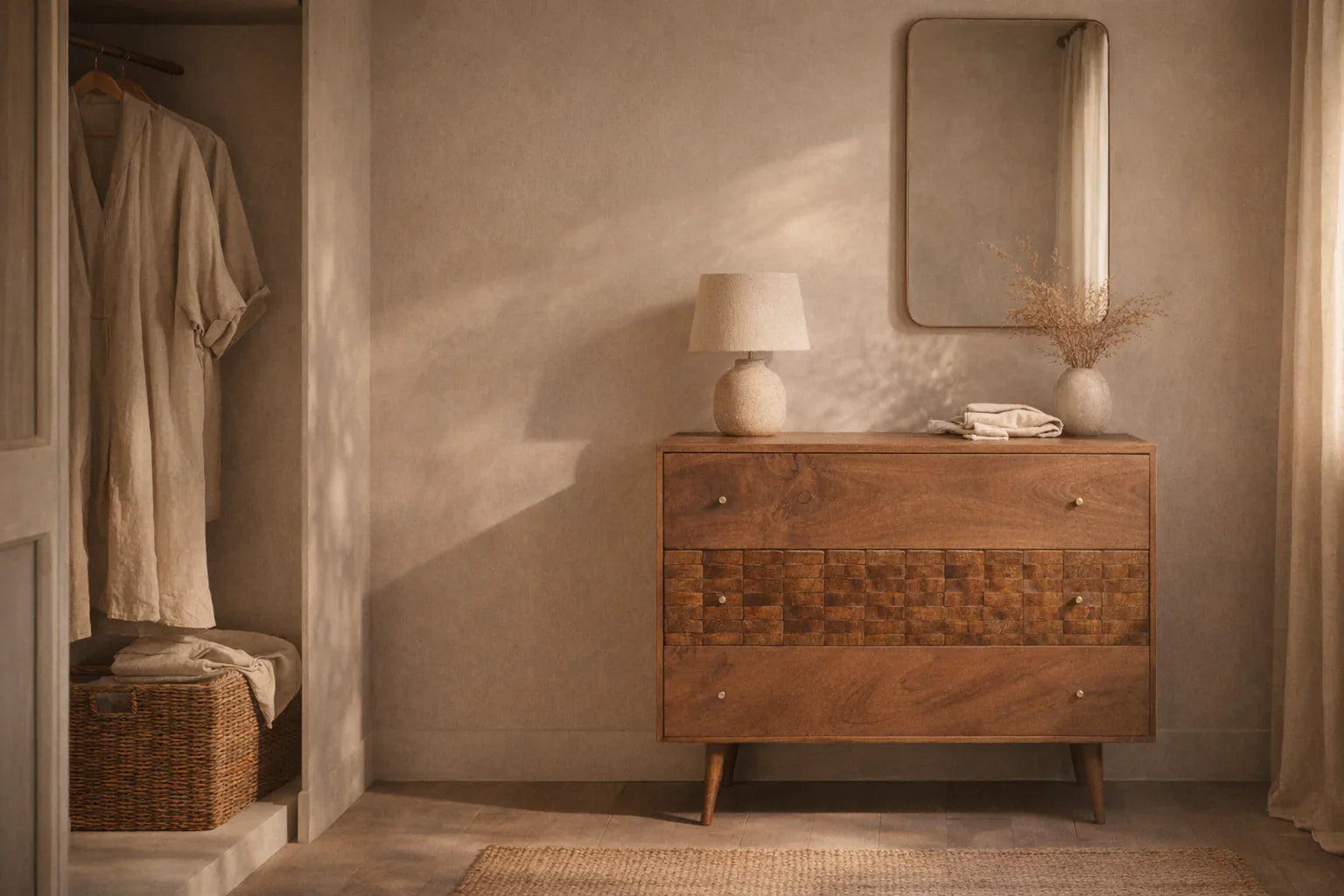
Not every bedroom calls for the standard layout. A chest of drawers is taller and narrower than a wide dresser, which makes it the smarter choice for rooms where floor space is limited. If wall length is the constraint, a chest gives you comparable storage capacity without the footprint. A dresser-and-mirror pairing works well when you want a dedicated surface for reflection and styling, and it anchors a wall more deliberately than a dresser alone.
Expanded matching bedroom sets add pieces like a bench at the foot of the bed, a wardrobe for rooms without built-in closets, or a vanity for anyone who needs a dedicated grooming space. The best complete bedroom sets let you configure around your actual room rather than locking you into a fixed bundle. That flexibility is worth looking for when you're comparing brands.
How to size your room for bedroom furniture collections
Matching mattress size to room dimensions
The math here is straightforward, and it matters. A Queen bed at 60 by 80 inches fits comfortably in a 10-by-10 room and still leaves space for nightstands and a dresser. A King at 76 by 80 inches needs at least 12 by 13 feet to breathe. A California King adds four inches of length over a standard King and works best in a 12-by-14 layout, particularly for taller sleepers. Measure the room first, then choose the bed size. Doing it in reverse is how you end up with furniture that feels forced into the space. If you want a practical shopping checklist, consult an easy-to-follow guide on how to buy a bedroom set.
The clearance rules most buyers ignore
A 24 to 30 inch walking path on each accessible side of the bed is the minimum for a functional room. The ideal is 36 inches, especially around a King, where you need room to move comfortably without brushing the nightstand every morning. At the foot of the bed, 36 to 48 inches gives you space for a bench, for changing bedding without acrobatics, and for the room to feel open rather than occupied.
Door swing clearance and floor vent placement are easy to overlook until you're standing in the room with furniture that can't be moved. A dresser placed directly opposite the bed affects how spacious the room feels, even if the actual measurements are fine. The goal is practical geometry: a layout where every piece belongs and nothing was forced in.
Why the material your furniture is built from matters more than the price tag
Solid wood vs. engineered wood: what you actually get
Solid hardwoods, including oak, maple, mango wood, and hickory, hold up to decades of daily use, can be refinished when they show wear, and develop genuine character over time. Industry lifespan estimates are consistent: solid hardwood furniture lasts 30 to 100 years on average, while MDF and engineered wood typically last 5 to 15 years before they begin to fail. Engineered wood products are more dimensionally stable in humid climates and significantly cheaper upfront, but they cannot be refinished, and once the surface fails, the piece is done.
Neither option is universally wrong. But understanding the trade-off changes how you read a price tag. To illustrate: a $700 engineered wood set replaced every ten years costs more over a lifetime than a $1,500 solid wood set that outlasts the house. The true cost of furniture is the cost divided by the years you actually keep it.
What to look for in finishes and construction details
Kiln-drying is a meaningful quality marker. Wood that hasn't been properly dried will warp as it acclimates to your home's humidity, and no finish will fix that. Dovetail joinery on drawer boxes is a sign of honest craftsmanship: it's time-consuming to produce and signals that the maker cared about structural integrity, not just surface appearance. The difference between a stained veneer and a real wood finish is also worth understanding. A veneer can look identical to solid wood from a distance but won't survive refinishing.
Mango wood is a fast-growing hardwood with a Janka hardness of around 1,070 pounds-force, comparable to red oak in durability, though harder species like white oak rank higher on the scale. Its pronounced natural grain means no two pieces look identical, which is a defining characteristic of Mercer & Gray's solid wood collections. For a deeper primer on the advantages and considerations of mango wood, see this overview of mango wood furniture benefits. Each piece carries its own grain pattern, which is exactly what you lose when you buy factory-uniform furniture.
The real case for buying a curated collection over mixing pieces
Why mixing furniture from multiple brands usually backfires
The visual problem with mixing is subtle but persistent. Two pieces can share a wood tone and still feel wrong together if their grain directions differ, if the sheen on one finish is slightly more matte, or if the hardware scale doesn't match. These aren't flaws you can identify with a tape measure. They're design decisions that either align or they don't, and when they don't, the room never fully settles.
A curated collection sidesteps this entirely because every piece was designed around the same material, proportions, and finish from the beginning. The nightstand hardware relates to the bed frame hardware. The dresser finish was chosen to sit alongside the headboard, not just match it from a swatch card. If you're wrestling with the idea of intentionally mixing styles, our piece on mismatch bedroom furniture explains when mixing can work and when it usually doesn't. The result of buying a coherent set is a room that looks like someone made decisions rather than a room that looks like someone went shopping.
How named bedroom furniture collections create a unified aesthetic
Named bedroom suites take that coherence a step further. Mercer & Gray's collections are each built around a specific design language: the same solid mango wood throughout, the same finish family, hardware that scales consistently from the bed frame to the dresser to the nightstand. Buying within a single named collection removes all the visual guesswork. You're not trying to recreate the coherence that the designer already built in.
For anyone who wants a warm, handcrafted aesthetic without spending weeks sourcing from multiple brands, this is exactly the problem a well-designed collection solves. The cohesion isn't an accident. It was designed in from the first sketch.
What to expect at each price tier in 2026
Entry-level and mid-range bedroom furniture sets: where value actually lives
Three-piece sets in the $550 to $700 range suit smaller rooms and first-time buyers. This tier typically includes a bed, one nightstand, and a dresser, often in modern minimalist or rustic finishes. Joinery is functional and finishes are consistent, but customization options tend to be limited. The four-piece Queen range, running roughly $800 to $1,300, is where most buyers land. At this level, you'll generally find two nightstands, better drawer construction, and a wider selection of finishes, the point where quality becomes visible rather than just implied.
Luxury and artisan-grade collections: what the premium buys you
Above $1,500, several things change. Solid hardwood throughout, not just on the face frames. Handcrafted construction with genuine joinery rather than cam locks and dowels. Bespoke customization options, including finish choices, fabric selections, inlays, and carvings. At this tier, the investment calculation shifts: you're no longer buying furniture you'll replace. You're buying pieces that outlast the trend cycle and can be passed down.
Mercer & Gray sits in this tier with a fully bespoke customization system, a concrete answer to what premium actually means in practice. You're commissioning furniture built to your room, not selecting the least-wrong option from a catalog. For a closer look at what styles are trending in the current year, you can read our piece on What Bedroom Furniture Is in Style in 2026?.
Delivery, assembly, and warranty: what to verify before checkout
Shipping options and what white-glove delivery actually means
Standard threshold delivery means the furniture is left at your door or just inside the entrance. White-glove delivery means it's brought into your room of choice, assembled, and the packaging is removed. At most mass-market retailers, white-glove service is a paid add-on. Costs vary by retailer, but common fees run $100 to $250 per shipment, with some services reaching $300 or more depending on order size and location. For a clear description of what to expect from a white-glove delivery service, consult a specialist's overview before you buy. It's worth factoring into the total landed cost when comparing prices across brands.
Assembly complexity and warranty terms worth reading
Solid wood bed frames generally involve straightforward hardware connections: rails to headboard and footboard, slats across the frame. The process is more intuitive than flat-pack engineered wood, which often involves more components, more steps, and more room for error. On warranties, the industry standard is a one-year limited warranty, but better brands extend coverage on structural integrity. Return windows typically run 30 days, which matters for large sets that are difficult to box back up.
Ask specifically about finish defects and joinery failures, not just surface damage. Surface damage is easy to document. Structural failures are where warranty language gets evasive, and that's exactly the coverage that matters for a piece you're buying to keep for decades.
A bedroom that feels complete starts with one clear decision
A bedroom that feels calm and considered doesn't come from more choices. It comes from the right ones. The right bedroom furniture collection is sized correctly for your actual room, built from materials honest enough to last, and designed with enough internal coherence that no single piece looks like it wandered in from somewhere else.
Start with your room dimensions. Then get clear on your aesthetic direction, whether that's warm and handcrafted, minimal and clean, or something with real texture and character. Find a collection built around both. That sequence removes most of the second-guessing.
Mercer & Gray's bedroom furniture collections are designed with that logic in mind: every piece within a collection shares the same solid mango wood, the same finish approach, and the same design proportions. Browse by room or by collection to find the configuration that fits your space, and use the customization options to make it yours, or consult curated roundups of the best bedroom furniture sets of the year to see examples of cohesive implementations.
Bedroom furniture collections FAQ
What is typically included in a bedroom furniture collection?
Most bedroom furniture collections include a bed frame, one or two nightstands, and a dresser. Three-piece sets are common for smaller rooms; four-piece sets (adding a second nightstand) are standard in master bedrooms. Expanded sets may include a chest of drawers, a bench, a wardrobe, or a mirror.
Are bedroom furniture collections worth it compared to buying individual pieces?
For most buyers, yes. Coordinated bedroom furniture is designed as a unified system, same wood, same finish family, same hardware proportions, which removes the guesswork of matching pieces from different brands. The visual coherence alone is difficult to replicate when mixing, and named collections make it easy to add pieces later without losing the look.
What's the difference between a three-piece and a four-piece bedroom set?
A three-piece set typically includes a bed, one nightstand, and a dresser. A four-piece set adds a second nightstand, making it the more practical choice for shared master bedrooms where symmetry and storage matter for two people. Some complete bedroom sets go further, adding a chest, mirror, or bench.
How do I know which bedroom furniture collection will fit my room?
Measure your room first, then select a bed size that leaves at least 24 to 30 inches of walking clearance on each side and 36 to 48 inches at the foot. Use those numbers to determine which collection configuration, three-piece, four-piece, or expanded, fits your layout without forcing pieces into the space.