Best Mango Wood Furniture Pieces for Every Room
Most people furnish their homes reactively. They move in, realize they need a sofa, buy one. Then a bed, then a dining table, usually from three different places over three different years. The result is a home that looks assembled rather than chosen. If you're looking for the best mango wood furniture pieces for every room, you've already made the smarter call: mango wood is one of the rare materials that translates across every space without effort, giving a whole home a coherent, grounded feel.
At Mercer & Gray, we built our collections room by room for exactly this reason, pieces that anchor a dining room, warm up a bedroom, and ground an entryway without looking like they came from different homes. This guide covers concrete recommendations, styling direction, and care basics so you can buy once and stop thinking about it.
What makes mango wood worth buying for your whole home
Before the room-by-room breakdown, it's worth understanding why mango wood holds up across so many spaces. The short answer is density. Mango wood has a Janka hardness rating of approximately 1,120 lbf, which puts it in the same range as oak and ash. It resists warping, cracking, and everyday surface damage with minimal upkeep, though, like any solid wood, it does benefit from periodic conditioning and proper finishing. Its tight grain structure limits moisture penetration, and its natural oil content adds a baseline resistance to decay that softer woods simply don't have.
The sustainability story is equally grounded. Mango trees are typically harvested after roughly 15 years, once they stop producing fruit, which means the timber is a byproduct of food farming rather than dedicated logging. That orchard-sourced model significantly reduces pressure on forested land compared to conventional hardwood sourcing, though not every mango wood product on the market can make the same claim, it's worth checking for FSC (Forest Stewardship Council) certification as the most reliable indicator of ethical supply chain practices. Some manufacturers also work with reclaimed mango wood, repurposing timber from demolished structures or older orchards, which takes the sustainability case even further. When you see "reclaimed mango wood" on a product listing, it signals the lowest-impact sourcing option available.
Room-by-room guide: best mango wood furniture pieces for every room
Living room: choosing the right mango wood coffee table
The living room is usually the first room people furnish, and the coffee table is the piece most people get wrong. They buy it last, treat it as filler, and end up with something that doesn't belong. A well-chosen mango wood coffee table does the opposite: it centers the whole room.
Mango wood coffee tables generally fall into a few finish categories. Distressed and rustic finishes, think drum shapes with lodge-inspired character, suit casual or farmhouse interiors. Smooth, rich finishes with cleaner lines work in mid-century or transitional rooms. Industrial styles pair exposed metal frames with the warm grain for urban interiors. Entry-level options start around $319 for low-profile pieces. Mid-range sits between $600 and $700, which covers most well-constructed solid wood options. Storage-focused premium pieces reach around $799.
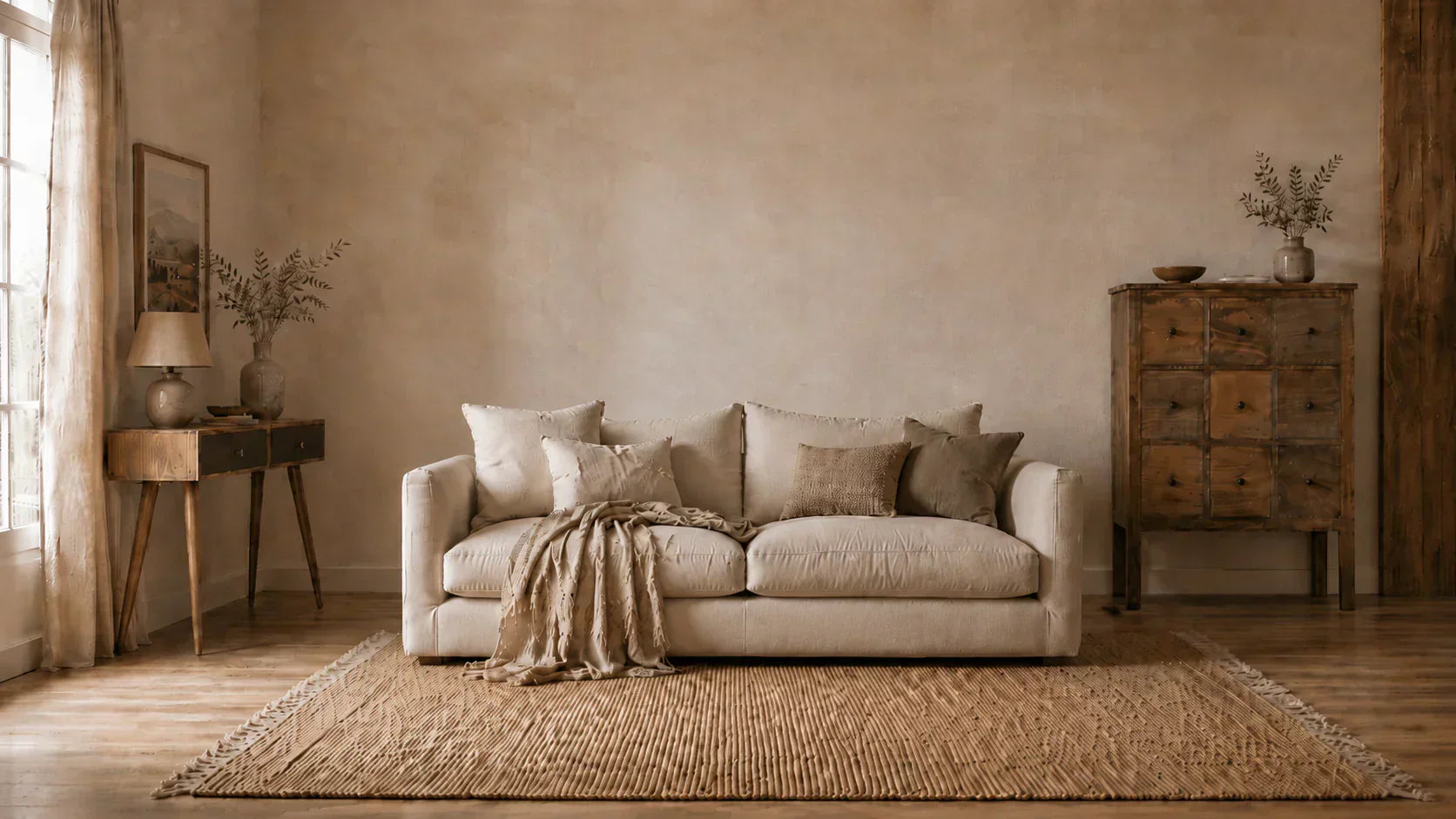
For layout, rectangular tables work in front of larger sectionals. Round or drum shapes suit smaller seating arrangements where you don't want the table to dominate. Mercer & Gray's Haven and Cove collections both work well in natural living room palettes, with finish options that pair cleanly with warm-toned upholstery. If you're unsure about spacing or placement, see our How to Place Furniture in a Living Room guide for practical layout advice.
Pair a mango wood coffee table with a jute rug, linen throw, and wall tones in warm white, sage, or terracotta. Use a tray to group smaller objects and vary height with a stack of books or a low ceramic vessel. Coasters matter more than people expect here, mango wood is dense, but prolonged moisture exposure will mark the surface over time. The grain variation you'll find in solid mango wood means no two tables look identical. That's a feature worth keeping intact.
Dining room: the mango wood dining table built for decades of meals
A dining table is probably the most consequential furniture purchase in a home. It's where the most time gets spent, the most weight gets placed, and the most spills happen. Buying on looks alone means you may find yourself replacing it far sooner than you'd like.
The key indicators are straightforward. Look for a 100% solid mango wood top, not veneer or engineered composite. Reinforced joinery, hand-turned legs, and a protective finish (low-VOC lacquer or hand-applied sealant) round out the picture. Heirloom-grade construction means no wobble after years of use, no veneer peeling at the corners, and joints that hold under real household load. Mango wood's Janka hardness gives it good resistance to dents and surface damage under daily family use, though proper finishing and care remain important factors in long-term performance. For a broader comparison of durable timbers and what to expect from different species, see this guide to the best solid woods for your dining table.
Mercer & Gray's Orchard and Edessa dining collections use traditional joinery techniques that mass-produced furniture typically skips. That difference in construction becomes apparent over years of use, not in the first week.
For a natural or organic feel, pair with rattan chairs, linen runners, and ceramic tableware. For a modern or transitional look, use upholstered bench seating, clean-line pendant lighting, and matte black hardware. If your style runs more eclectic or boho, mix seating styles, layer textiles, and vary candle heights for depth. Mango wood's tonal range, from warm honey to dark walnut, plays well across all of these, which is a big part of why it adapts so well to different aesthetics.
Bedroom: mango wood bed frames and nightstands worth the investment
The bedroom is where mango wood furniture makes the most emotional impact. It's the room you start and end every day in, and the quality of what surrounds you registers even when you're not consciously noticing it. A well-made mango wood bed frame, solid, warm-grained, quietly crafted, sets a tone that cheap substitutes simply can't replicate. Getting that anchor piece right matters more than people usually admit.
For a modern bedroom, low-profile platform frames with clean lines and minimal headboard detail translate well. Queen sizes in this style typically run $1,099 to $3,000 depending on construction quality. Farmhouse styles favor live-edge or paneled headboards with warm stain finishes, and prices range from $2,000 to $4,000 when storage options are included. Boho-leaning spaces suit frames with visible grain character and carved detail, usually in the $1,500 to $3,000 range.
Mercer & Gray's Vale and Haven bedroom collections sit naturally across all three directions. The grain character in solid mango wood does a lot of the visual work, so even a relatively simple frame reads as something crafted rather than manufactured.
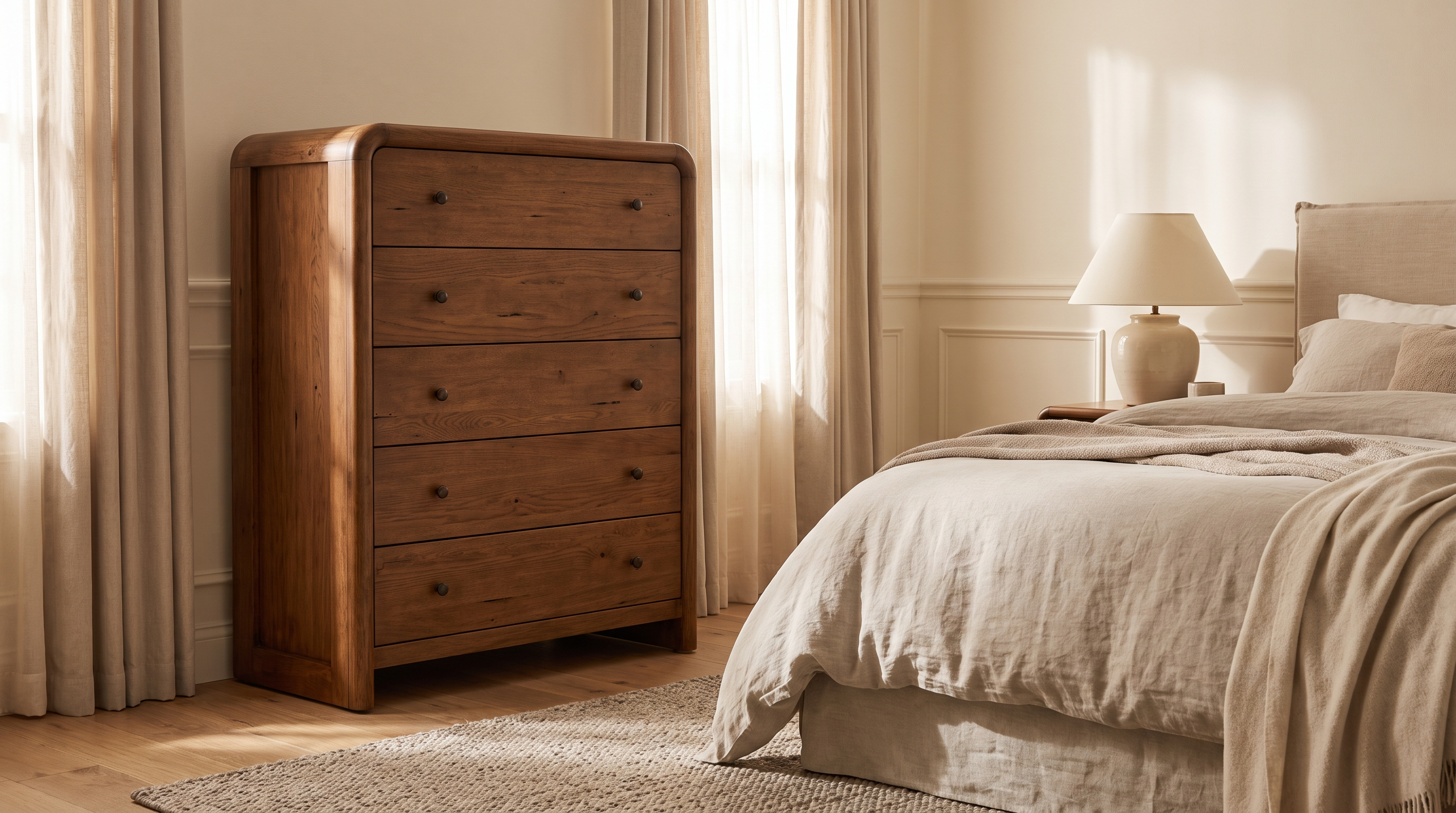
Start with the bed frame. Everything else follows from it. Once that anchor piece is chosen, add matching nightstands from the same collection, typically $500 to $1,500 each depending on scale and storage. Matching within a single collection matters visually because it keeps the wood tone and finish consistent, which prevents the "assembled over time" look. If you need to adapt an off-the-shelf piece to match existing room elements, Mercer & Gray offers finish options across its bedroom collections that let you dial in the right look without a full custom build. If you prefer mixing styles rather than matching everything, read our Mismatch Bedroom Furniture: A Stylish Guide for tips on balancing contrast and cohesion.
Entryway and home office: the rooms most people underfurnish
These two rooms get treated as afterthoughts, and it shows. The entryway sets your first impression of the whole home every time you walk through the door. The home office shapes how focused and settled you feel for hours each day. In both spaces, a single well-chosen mango wood piece can shift the feel from provisional to intentional.
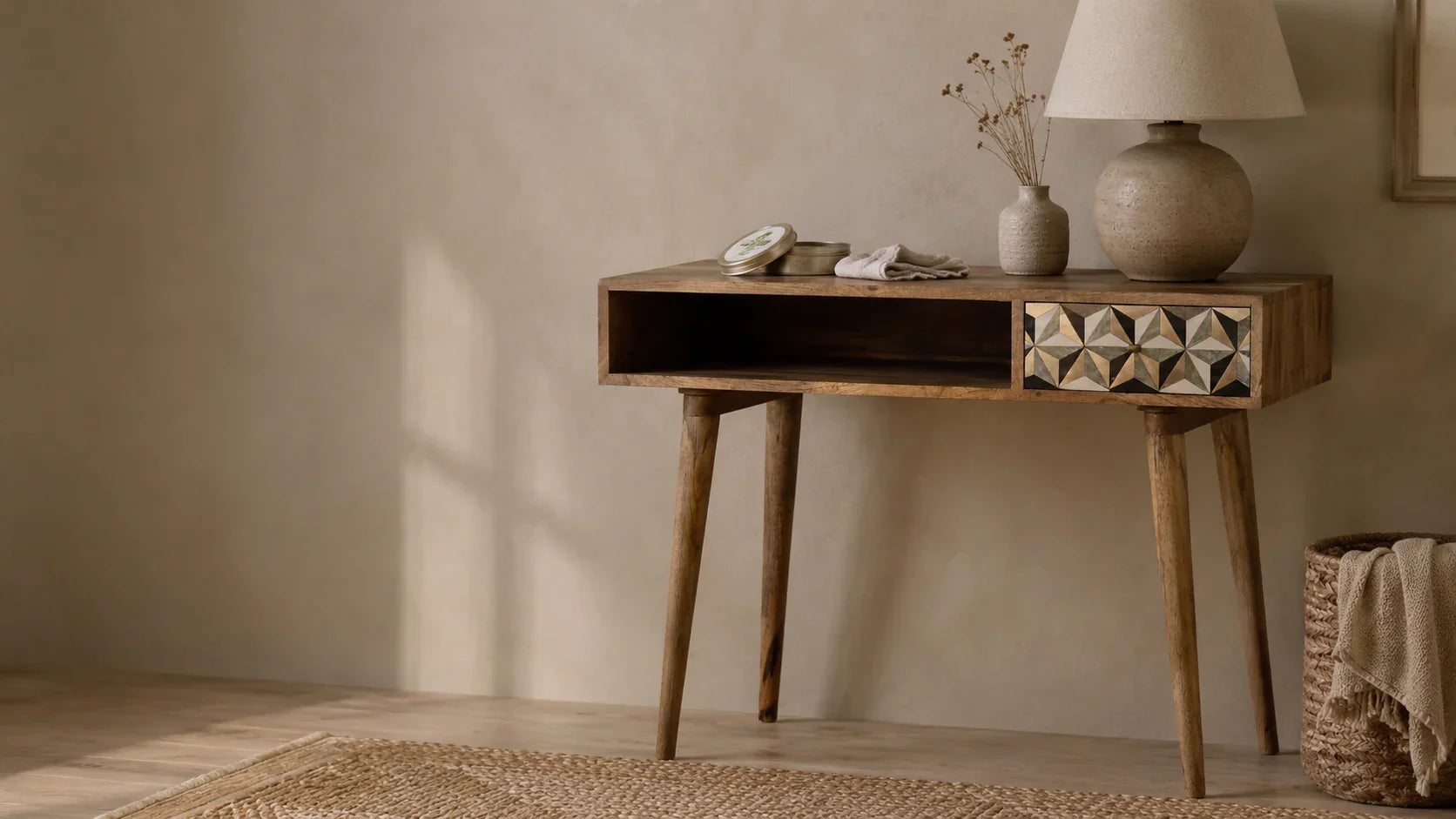
A good entryway console needs to be narrow (measure your hallway first, many work best with a depth well under 16 inches), visually warm, and practical. Keys, a lamp, and something seasonal live on this surface daily. A mango wood console delivers natural texture that tile, paint, and mirrors alone can't provide. Mercer & Gray's Solace and Cove collections both include entryway-specific pieces with a narrow footprint and the grain detail that works in tight hallway spaces without overwhelming them.
The problem with most home office furniture is that it looks like office furniture. Mango wood desks sidestep that entirely. The warm grain softens the clinical feel of a monitor-and-chair setup in a way that white laminate and metal legs never will. Look for desks with solid aprons for structural stability, a finish that won't show wrist wear at the front edge, and dimensions that fit the space without dominating it. For buyers who need a specific tone to match existing room elements, Mercer & Gray's finish options across its desk range let you dial in the exact look without a custom build price tag.
How to keep mango wood furniture looking good for years
Mango wood is low-maintenance. Once the right habits are routine, they take almost no effort. The goal is preserving the finish and preventing moisture damage, the two main ways solid wood furniture degrades over time.
Daily cleaning and protection habits
Use a dry microfiber cloth for daily dusting. Wipe spills immediately. Don't let moisture sit on the surface. Use coasters and placemats under anything hot or wet. Keep pieces away from direct sunlight and heat sources like radiators or vents. The optimal humidity range is 40 to 55 percent, outside that range, solid wood is more prone to warping and cracking. These aren't burdensome rules; they're five-second habits that add decades to a piece's life.
When and how to condition the finish
Every three to four months, apply a coat of mineral oil using a lint-free cloth. Work it in with circular motions following the grain, and let it absorb for 20 to 30 minutes. Follow with a beeswax sealant, then buff gently with a clean cloth. For minor scratches, this oil-and-wax routine usually suffices. For deeper damage, light sanding before reapplication restores the surface without needing a full refinish. For a practical how-to and cleaning timeline, see this guide on how to care for mango wood furniture.
Caring well for solid wood furniture is itself the sustainable act. You're choosing longevity over replacement, and that's the entire point of buying quality in the first place.
Buying once, buying right
These are the best mango wood furniture pieces for every room, choose once and enjoy for decades. A dining table that handles every family dinner, a bed frame that still looks right a decade from now, a console table that anchors your front door without demanding attention. That's what solid wood done well actually delivers: the right piece for each room, chosen with intention, not replaced on a cycle.
Mercer & Gray's multi-room collections are designed to work together across spaces, which makes them a practical starting point if you're furnishing more than one room and want pieces that feel cohesive rather than coincidental. Browse by room on the Mercer & Gray site to find pieces built specifically for the space you're working on. As you shop, it's also useful to weigh outside perspectives on the pros and cons of mango furniture, and to look for certification benchmarks, like the FSC, when supply-chain transparency matters; learn more about what FSC certification means.